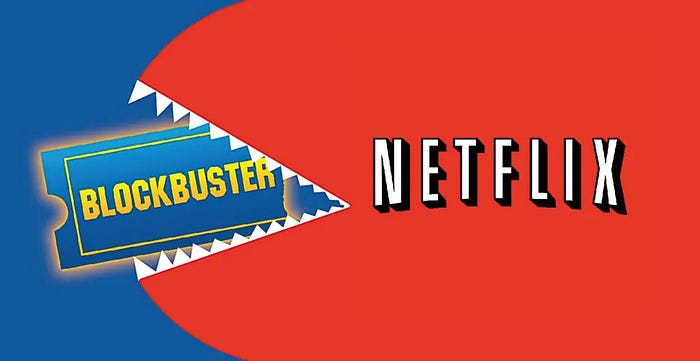

The Friday Night Ritual That Vanished
Picture this: It's a Friday night in the late ྖs. You walk into a brightly lit Blockbuster store, shelves stacked with VHS tapes and DVDs. The smell of buttered popcorn lingers in the air. Families, couples, and solo movie buffs scan the aisles, hunting for the perfect weekend watch. The excitement of discovering a hidden gem, the anxiety of grabbing the last copy of a hit movie, it was all part of the ritual.
Then, suddenly, it was gone. The blue-and-yellow Blockbuster signs dimmed, stores shuttered, and an era came to an end. The culprit? A little-known company at the time, called Netflix.
But how did a DVD rental-by-mail service evolve into the streaming juggernaut that took down an empire?
The $50 Billion Mistake
In 2000, Netflix, struggling to grow, approached Blockbuster with an offer: Buy us for $50 million. The idea was simple, Netflix would handle the online business while Blockbuster continued to dominate physical rentals. The response? Laughter.
John Antioco, Blockbuster's CEO, saw no threat in a company mailing DVDs to people's homes. His strategy focused on store locations, late fees, and an existing customer base. To him, Netflix was just a niche business.
That decision would become one of the biggest mistakes in business history.
The Silent Revolution
While Blockbuster thrived on store visits and late fees, Netflix quietly built its future. It introduced a subscription model with unlimited rentals and no late fees a direct attack on what customers hated about Blockbuster.
Then came the game-changer: streaming. In 2007, Netflix allowed users to instantly watch movies online. No more trips to the store. No more scratched DVDs. Just a click, and your movie started.
Blockbuster, slow to react, launched its own streaming service in 2004 but failed to invest in it properly. The company still relied heavily on its retail stores, while Netflix embraced digital transformation.
A Slow and Painful Death
By 2010, Blockbuster filed for bankruptcy. What was once an empire with 9,000 stores and $6 billion in revenue crumbled under its own weight. Meanwhile, Netflix had already started investing in original content, making it not just a streaming service but a full-fledged entertainment powerhouse.
Blockbuster's final blow? The rise of smart TVs, mobile apps, and broadband internet, which made streaming the undisputed king of home entertainment.
Today, Netflix boasts over 230 million subscribers worldwide. It produces award-winning movies and shows, shaping global pop culture. Blockbuster, on the other hand, has only one store left in the world, a relic of what once was.
The Lesson: Adapt or Die
Netflix didn't just beat Blockbuster; it redefined how we consume content. The lesson is clear: industries change, consumer behavior shifts, and companies that fail to evolve get left behind.
Blockbuster was too focused on protecting its old business model. Netflix? It wasn't afraid to disrupt itself. It went from mailing DVDs to streaming, then to producing content. And now, it's pushing into gaming and interactive storytelling.
The question is: who's next? In a world where technology moves at lightning speed, even today's giants could be tomorrow's Blockbusters.
One thing's for sure: entertainment will never be the same again.