


The lead magnet game is brutal.
A lot of people slap together a 5-page PDF, hide it behind an "enter email address" box, and hope they get a download.
But downloads aren't the goal.
Seeing that "1 new subscriber" notification in your inbox feels great, but what's the point if they never open another email?
I call it the download and dash.
A good lead magnet does more than collect email addresses.
It builds a connection. It says, "Hey, I get what you're struggling with, and I can actually help."
You don't need to reinvent the wheel to make this happen.
By focusing on what your audience needs (and maybe dusting off some of your existing content), you can create lead magnets that attract the right people and keep them coming back for more.
TL;DR so you don't have to scroll for days. Keep reading for a deeper dive into my 6 steps to bringing in leads who stick around:
Use Content You Already Have
- Popular Blog Posts
- Evergreen Content
- Updated Resources

Attract the People You Can Help

Design a Freebie that "Sells"

Differentiate with Your Experience
- Case Studies
- Client Success Data
- Proprietary Frameworks

Speed Up the Creation Process
- Poll Your Audience
- Repurpose Proven Content
- Use Tools and Templates
- Test Ideas on a Small Scale

Don't Ghost Your New Leads
- Email Sequences
- Retargeting Ads
- Social Media
Step 1 | Use Content You Already Have
I remember this one guide I wrote years ago. I published it here on Medium and to this day, it's one of my most read articles.

It was detailed and took me a lot longer to write than I'm happy to admit. But after a flood of claps, shares, and comments, engagement stopped. It was getting crushed at the bottom of my profile by every new article.
One night, when my creative bandwidth reached capacity, I had this lightbulb moment…
Why wasn't I turning my existing content into actual lead-generating assets?
The "Lead Magnet Rebrew" became my go-to strategy. It gives you a systematic approach to repurposing and covers most forms of content.
Here's how it works:
1. Popular Blog Posts
These are your low-hanging fruit. That writing guide? I transformed it into a downloadable checklist that people could use.
And get this — it wasn't just a boring PDF.
I made it interactive, with checkboxes and real-world examples that spoke directly to my ideal customer's pain points.
The short: Transform high-traffic articles into targeted content upgrades.
2. Evergreen Content
Those foundational resources you've created? They're not just articles, but potential tools. You know the ones:
- How-to Guides/Tutorials
- "Best Of" Lists
- Explainer Articles
- Checklists & Templates
By creating evergreen content, you can build a library of resources that continue to gain traffic and generate leads long after they are published.
I turned a marketing strategy post into an ROI calculator that small business owners could use instantly. People love quick, actionable resources they can plug their own numbers into.
The short: Convert timeless resources into practical tools like templates or calculators that provide immediate value.
3. Updated Resources
The world is changing fast. New tech is making processes faster and creation easier. Update old guides or social media posts with fresh ideas.
Add new case studies, update statistics, and throw in some current insights. Safe to say that most things pre-AI should be updated. Don't leave your past resources outdated and irrelevant.
The short: Package refined insights as exclusive guides that showcase your evolving expertise.
Don't overlook your most valuable lead magnet resource — existing content. It'll save you time and energy. Instead of constantly creating new content from scratch, you're maximizing what you've already created.
Pro tip: Update existing content you plan to repurpose with fresh keywords, internal links, and trending topics to give it a new reach.Step 2 | Attract the People You Can Help
When I first started, I made the rookie mistake of creating generic content that spoke to absolutely everyone… which meant it resonated with no one.
A social media marketing guide so broad it could've been written by a robot… and this was before ChatGPT!
Generic lead magnets perform poorly because they lack specificity.
The key is precision — create resources that solve one person's problem.
Implement the "Would They Pay for It?" test. It's brutally honest and saves you from wasting time on ideas that won't convert:
- Does the lead magnet address a specific pain point?
- Can it deliver immediate, actionable value?
- Would your ideal customer consider purchasing a similar resource?
Pain point targeting is important.
I spend hours in niche Facebook groups, Reddit threads, and TikTok comments. I'm not looking for drama — I'm understanding real frustrations.
You're not just creating content. You're building a bridge of trust with potential customers.
Every lead magnet is an opportunity to show "I understand exactly what you need and I can help."
Instead of a basic "Social Media Marketing Guide", create laser-focused resources like "Instagram Growth Strategies for Boutique Fashion Stores".
See the difference?
One speaks to everyone and the other speaks to a specific business.
Pro tip: Study the lead magnets your competitors offer and find opportunities to create something more focused or unique for your audience.Step 3 | Design a Freebie that "Sells"
I used to think fancy design was everything.
Embarrassed to say I've spent weeks creating beautifully designed PDFs that looked amazing but delivered zero actual value.
Zero downloads, zero leads. Lesson learned.
Writing articles helped me realize…
Value trumps visual polish every single time.
All you really need to focus on is the format in which you present the value. High-converting lead magnets come in a few formats:
- Templates & Checklists: Provide plug-and-play solutions
- Calculators: Deliver personalized tools
- Exclusive Insights: Share quick-win strategies nobody else talks about
- Content Upgrades: Enhance existing content
Now, while designing a lead magnet isn't just about looks, it always needs to be functional. Here's my non-negotiable checklist:
- Mobile optimization is mandatory
- Use clean, branded design
- Make information scannable
- Include actionable next steps
- Ensure instant value
Also, test everything!
I A/B tested two versions of the same lead magnet — one with a minimalist design and one more elaborate. The simpler version converted 40% better.
Always validate your assumptions.
Pro tip: Avoid overwhelming readers. If your content feels lengthy, consider breaking it into a series, like "Part 1: Templates" and "Part 2: Checklists."Step 4 | Differentiate with Your Experience
Originality turns lead magnets from a commodity to a resource.
When I first started, I thought general advice would cut it.
It doesn't.
I was just another voice in the noise, blending into the background of a thousand other brand designers.
The turning point?
Realizing my personal experiences were my most powerful marketing tool.
Your experiences don't have to show up as autobiographical "Why I Got Started" blog posts. Show who you are through your work, your personal philosophies, and your approach to the world.
Case studies
I'm not talking about bland, corporate-speak success stories.
I mean raw, real-world examples that show exactly how you've helped clients crush their goals.
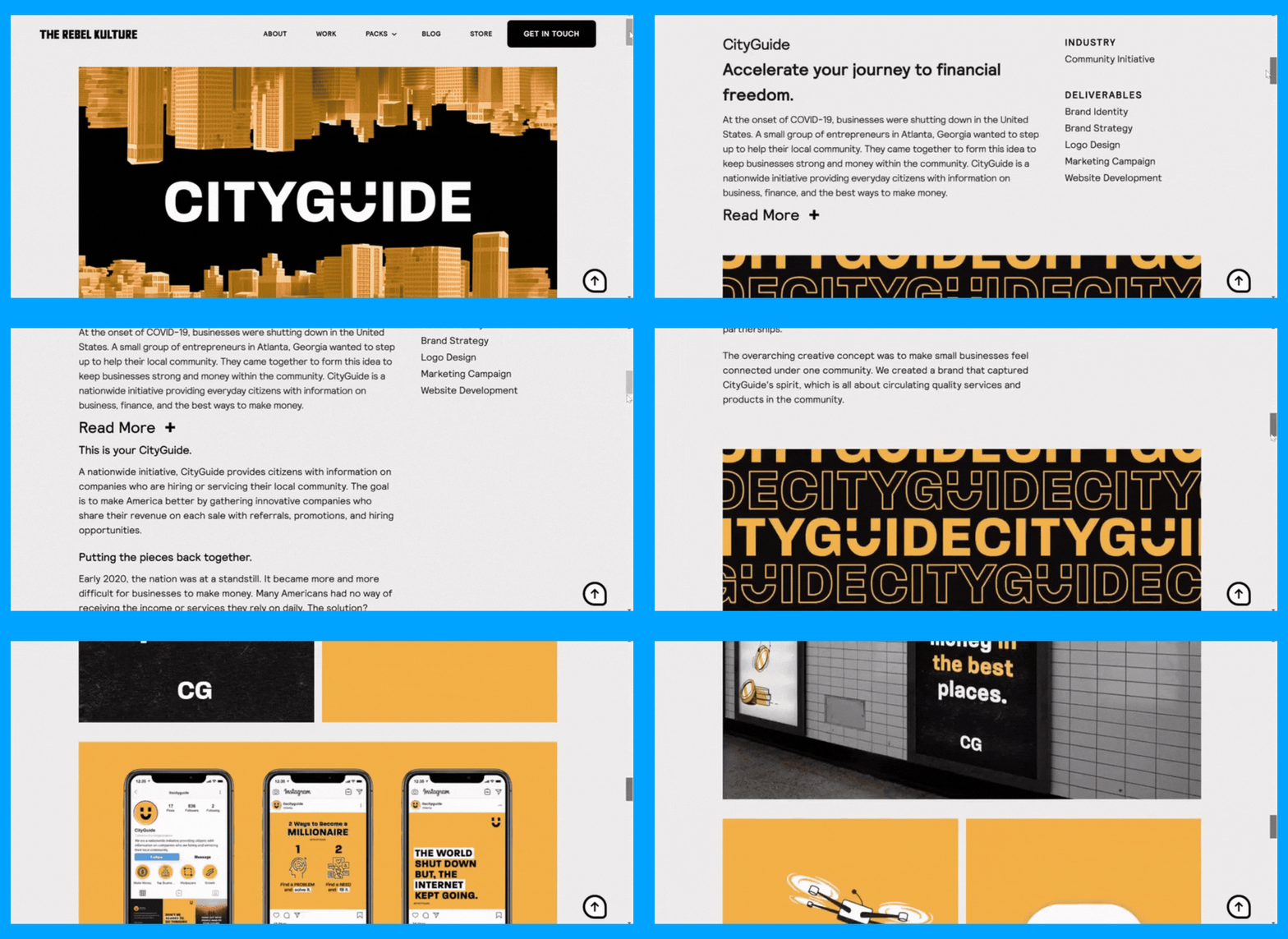
Client success data
Client success data isn't just numbers — it's storytelling.
I started collecting detailed metrics from every project, tracking not just the end result, but the journey. This became gold for creating compelling lead magnets that showed real, tangible value.
Proprietary frameworks
We all have different ways of attacking the world.
Condensing your thoughts and strategies into a repeatable framework is like creating your own philosophy.
Mine?
The "Brand Core Four" — a methodology I developed after years of trial and error. It wasn't just a catchy name; it was a reframing of what a brand is that solved real problems for my clients.

It explains how brand features like a logo, slogan, or website remain on the top layer. These are the most outward-facing features of a brand. What the world sees.
But the deeper we travel, the more we hit on things consumers can feel.
Future content, products, and internal and external decisions are successfully made when a brand is aligned on its core four:
- Brand Values
- Brand Mission
- Brand Vision
- Brand Purpose
That means stakeholders within the company understand why the company exists, what future they want to create, how they will create that future, and how they will behave in pursuit of those three.
The more I introduced the "Brand Core Four" in client projects, the more it became synonymous with my personal brand.
Clients don't just want results — they want to understand how you get those results. Breaking down my approach into a clear, step-by-step system became a lead magnet in itself.
Pro tip: Give your proprietary method a memorable name and simple visual structure (like a pyramid or cycle) to reinforce your authority.Step 5 | Speed Up the Creation Process
You don't need weeks to create a great lead magnet. You need a smart system.
I learned to break it down into a few methods:
Poll Your Audience to Validate Their Needs
Instead of guessing what your audience wants, ask them.
Polls, surveys, and feedback show which pain points or gaps you can address.
How-to:
- Use Instagram Stories or LinkedIn polls to ask your audience, "What's your biggest challenge in [your industry]?" Include specific options to choose from.
- Send a one-question survey to your email list: "If you could have one free resource to solve X, what would it be?"
Repurpose Proven Content
Repurposing high-performing blog posts, videos, or presentations is faster than starting from scratch and makes sure you're using the content your audience already finds valuable.
How-to:
- Extract evergreen content (like a webinar or podcast) and turn it into a toolkit, template, or even a quick-start guide.
- For time-sensitive topics, create quick-turnaround resources that offer immediate relevance, like "AI Tools for [Your Industry] in 2025."
Use Rapid Creation Tools and Templates
Graphic design, copywriting, and formatting can slow you down.
Tools like Canva, Notion, or even Google Docs offer pre-made templates to accelerate the process.
How-to:
- Turn a basic Google Sheet into a shareable tool like a content calendar template or ROI calculator.
- Write your content in apps like Notion or Evernote, then export them as polished PDFs with one-click formatting.
Test Ideas on a Small Scale
Testing allows you to measure interest and performance before committing significant resources to a large-scale lead magnet.
How-to:
- Test multiple lead magnet formats simultaneously (e.g., a checklist vs. a mini video guide) to see what resonates best.
- Use A/B testing for landing pages. Compare the conversion rates of different lead magnet headlines or designs to identify what works.
Pro tip: Begin with a quick, low-effort lead magnet to test the waters. Scale up to more detailed ones after gathering feedback.Step 6 | Don't Ghost Your Leads
Capturing contact information is just the beginning.
Think of it like meeting someone at a party — you wouldn't exchange numbers and then never call them, right? (Well, not if you want to build a relationship!).
The same applies here.
Once you have their email or phone number, the real work begins. Nurturing that connection so it grows into trust, loyalty, and eventually, a paying customer.
Implement multi-channel nurturing to deliver value at every touchpoint:
Email Sequences (Deliver value, build trust, introduce offers)
Most people mess this up. They either ghost their leads or bombard them with sales pitches.
My thoughts?
Provide massive value first.
My typical 5-email sequence looks like this:
- Deliver the promised lead magnet + unexpected bonus resource
- Share a personal story related to their challenge
- Provide an in-depth strategy they can implement immediately
- Case study showing real results
- Soft pitch introducing my paid offering
Retargeting Ads (Maintain visibility)
I create ads that feel like a continuation of the value I've already provided. Think educational content, not a desperate sales pitch.
Social Media (Share strategic content snippets)
Share content snippets that complement your email sequence. Break down complex strategies into bite-sized, shareable posts. Give people a reason to keep paying attention.
Pro tip: Introduce a low-cost, high-value product (like a $9 eBook or $19 mini-course) to convert leads into paying customers gradually.Finally, Your Lead Magnet Blueprint
By understanding your audience, leveraging existing content, and creating targeted resources, you can build a lead-generation system that consistently brings in people who actually need what you're offering.
Most marketers talk about lead generation. Successful entrepreneurs actually do something about it.
Your Immediate Action Plan:
- Content Audit: Dig through your existing materials. That blog post from two years ago? It might be your next lead magnet.
- Pain Point Detective: Focus on what keeps your ideal customers up at night. The more specific, the better.
- First Lead Magnet: Don't overthink it. Start small, test quickly, and improve.
Your first lead magnet won't be perfect. But it'll be infinitely better than the lead magnet you never create.
Get access to more marketing resources and product design tools with the Founder's Resource Library, an open-access database for Medium subscribers. Updated weekly with new resources.
Want more marketing tips and tricks? Subscribe to the Better Marketing newsletter The Marketing Memo here.