


Feature
How a popular genre of programming is failing its fans.
True crime has become one of the most popular genres on Netflix and has seen a resurgence in pop culture over the last few years. The turning point for Netflix came with the arrival of its critically acclaimed documentary series Making a Murderer (2015). Since then, the platform's seen the genre boom with a slew of much-discussed programs like The Keepers (2017), Abducted in Plain Sight (2017), and Wild Wild Country (2018), amongst others.
It may seem like a new phenomenon to some, but true-crime has fascinated the public for centuries. Despite being known for their prudish outlook, the Victorians loved nothing more than a grim horror story. It's no wonder the crimes of Jack the Ripper lived on past the 1880s, having been memorialised with such relish and in grisly detail by the tabloid newspapers of the time. True crime regularly shows that truth is often stranger than fiction, it has the potential to become the stuff of legend, inspiring countless whodunnits and procedurals.
With true crime back in the mainstream, it's once again become water cooler conversation. Anecdotally, my last manager and I bonded over our love of the popular podcast My Favorite Murder — something I couldn't have imagined being part of office small-talk just a few years ago. Netflix, in particular, has inspired endless public discourse with its own true crime documentaries, showcasing extraordinary tales of real crimes, corruption and conspiracies. So why does it feel like the genre is getting increasingly stale on the platform?
The answer dawned on me when I settled down to watch Unsolved Mysteries (2020), the reboot of the classic TV series that ran between 1987-2010, and Netflix's latest true crime offering. The series attracted a fair amount of interest online with plenty of articles debating theories surrounding the cases. According to Netflix, it was their most-watched program for a period, hitting its Top 10 quickly on release.
Naturally, this all suggested an arresting watch one could enjoy over the weekend. Instead, I found myself frustrated and unable to continue ignoring the issues that have plagued Netflix's true crime originals for a while now. In short, these documentaries are severely lacking on a few fronts. It appears that Netflix isn't trying when it comes to this genre anymore and, ultimately, it breaks down to the following issues: presentation, storytelling, and ethics.
Presenting a case
If you watch enough Netflix true crime documentaries, you'll notice that after Making a Murderer, Netflix started to adhere to a particular aesthetic. You know the one I mean — where everything takes on a hint of grey to reinforce the blatantly grim topic and lend some authenticity to the often skewed and biased perspectives. While cinematography's not the only way to engage an audience, it certainly adds to your viewing pleasure. This is likely rooted in the belief that if it worked for one show, it should work for the rest, because producers love nothing if not a proven formula for success.
I'm sure having everything shot and graded the same way saves production and post-production costs, too, but it certainly doesn't make exciting viewing for your audience. For example, Unsolved Mysteries clearly has a budget and there's a degree of refinement to the series. But, despite the high quality of production, the grading feels flat and drained of colour, to the point where the overall cinematography takes on a monochromatic look. Having seen the same look in Netflix's documentaries The Killer Inside: The Mind of Aaron Hernandez (2020), The Disappearance of Madeleine McCann (2019), and Making a Murderer, it's become overly familiar to me. The only reason Tiger King: Murder, Mayhem and Madness (2020) looked as colourful as it did was due to the people it documented: it's hard to look dull with that much animal print and the essence of Florida itself on-screen.

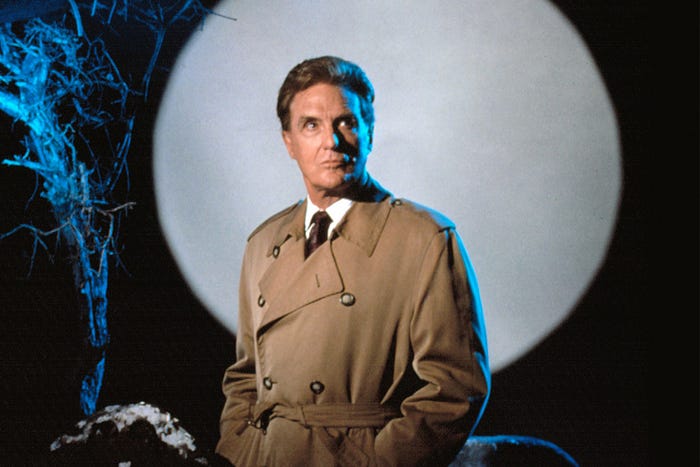
There's also the issue of too much filler. When comparing the reboot with the original Unsolved Mysteries, it becomes apparent that the original show benefited from focusing on three cases in each episode. These stories were tied together through narration by the show's iconic host, actor Robert Stack, usually seen in a trench coat and inexplicably standing somewhere dark and deserted.
The show was successful at conveying the relevant information of each case within a certain amount of time, something I believe the reboot struggles with. Focusing on one case per episode, each with a 45–50-minute runtime, can be done but if the reboot is going to continue doing this, it needs enough information to fill the allotted time, or it has to restructure its approach to presenting the case.
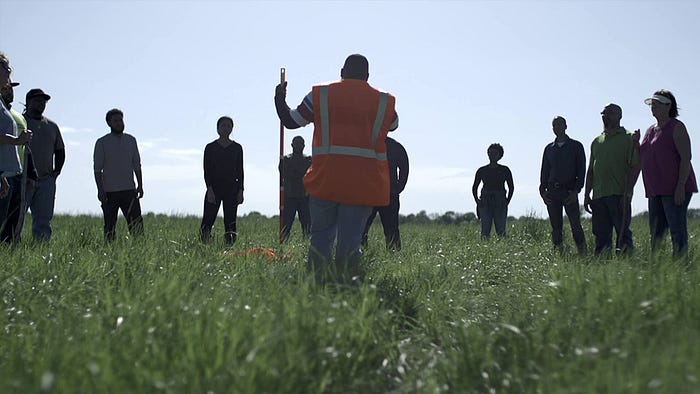
For example, the third episode of the new series, "No Ride Home", discusses the case of Alonzo Brooks, a 23-year-old Afro-Latino man who went missing after attending a party and was found dead a month later. Due to Brooks' race and reports of allegations that racist remarks made at the party, it's widely believed that Brooks died as the result of a hate crime. The problem with the episode, however, was that you could have read his Wikipedia page and come away with the same knowledge about what happened. If the episode had included some additional historical context of hate crimes in the area, or perhaps further scrutinised the apparent lack of interest from the authorities to properly investigate the case, it would have been a far richer episode. Instead, none of those issues got fully explored and it made for an unfulfilling watch.
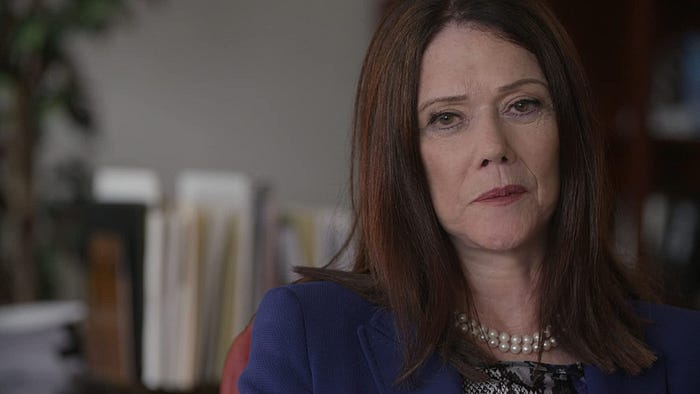
The issue with Netflix's presentation isn't just a matter of uninspiring cinematography or irrelevant filler. Many of its programs fit within an incredibly formulaic format wherein the viewer can tell from the start how a case will be presented. There'll be some talking heads interviews, a literal timeline will appear on-screen to show the chronology of events, and theories will be explored before coming to a usually predictable conclusion. This isn't inherently bad, but when every documentary you watch follows this formula it becomes disengaging and repetitive for viewers. We've seen attempts to change up the approach to filmmaking with programs like Casting JonBenét (2017), an eerie reconstruction docu-drama where the people of Boulder, Colorado re-enacted different scenarios of their hometown's most infamous crime. It would be excellent to see more of this experimental filmmaking because, even if it gives mixed results, it's thought-provoking and immerses the viewer in the world far more effectively.
Storytelling is key
Not only does it stick to an uninspiring formula, but Netflix also has a consistent problem with its storytelling. There were numerous times during Unsolved Mysteries where one wouldn't be wrong for questioning basic elements of the case! In some of the tales presented, it's not entirely clear why some alleged perpetrators didn't face criminal charges or how much police were involved in the overall investigation. What makes it even more baffling is that every episode so far (with the exception of the fifth "Berkshires UFO" episode) presents a credible suspect for each case. While this somewhat diminishes the mystery factor, it raises a bigger question: if these cases have a suspect at the centre of them, why exactly have the persons involved never been brought to justice? Documentarians would surely look at this as their central point of enquiry and investigate the following questions: who was involved? What evidence is there that proves their guilt or innocence? What leads could resolve this case?
This is perhaps the biggest flaw of Unsolved Mysteries: the filmmakers don't appear to care about presenting a clear, well-researched case. Not only is this poor investigating, but it's also irresponsible filmmaking. These cases matter because they're the narrative of real people's lives, not stories made up for the sake of entertainment. The audience is watching witnesses and survivors of harrowing crimes and they themselves are seeking answers. By comparison, the original Unsolved Mysteries functioned much in the way that the British programme Crimewatch (1984–2017) did, reconstructing crimes to raise raising public awareness and hopefully bringing new information and witnesses in. It was remarkably successful in achieving its goal and it is estimated that over 260 cases were solved during the show's original run.
The new Unsolved Mysteries clearly wishes to do the same with its website imploring visitors to "help solve a mystery". However, if it wants to make a difference, it must change its format to actually take a productive step toward a positive impact. It owes its participants at least that much for re-living such traumatic events on camera.

Netflix has shown that it's capable of producing well-researched documentaries that tackle complex subjects. Killer Inside: The Mind of Aaron Hernandez was a great example, covering a lot of information in the space of three episodes. It acknowledged a variety of important issues in American football that contributed to player Aaron Hernandez's crimes, such as homophobia, drug use, toxic masculinity, and chronic traumatic encephalopathy (CTE). The documentary paid attention to the details, providing a comprehensive insight into the mind of Aaron Hernandez, living up to its name and setting a precedent for what Netflix could be.
While we're on the subject of fact-checking, Netflix has a bad reputation for presenting facts in a dishonest fashion. Two of their most popular series make this obvious; Making a Murderer and The Staircase (2004–2018). Making a Murderer was a blueprint for what Netflix's true crime output has become. It drew in viewers not usually interested in true crime and took them on a journey through a fascinating, difficult case, albeit using a narrative was riddled with problems.
In 1985, Steven Avery was wrongly convicted of rape and attempted murder and, in a strange turn of events, he and his then-teenage nephew, Brendan Dassey, were later convicted for the murder of photographer Teresa Halbach. Whilst the series rightfully raised questions around the police's coerced confession from Brendan Dassey, it crafted a false narrative to suit its case in favour of Avery's innocence, excluding vital evidence that suggested Avery did kill Halbach. Penny Beerntsen, the woman whom Avery was falsely accused of assaulting, declined to appear in Making a Murderer chiefly due to her belief that the filmmakers had already decided Avery was innocent and that they were not interested in "seeking the truth".

The Staircase had a similar problem where the filmmakers clearly decided to portray their subject as innocent, regardless of whether the evidence suggested otherwise. It's important to note that The Staircase was a French miniseries originally created by director Jean-Xavier de Lestrade and later re-released with an additional three episodes by Netflix.
Yet the point stands on the basis that the streaming platform chose this miniseries despite existing criticism and accusations of strong bias in the portrayal of Michael Peterson, a man charged with murdering his wife Kathleen Peterson. The show omitted a shocking number of important facts to portray Peterson favourably and in a further unethical twist, it was later revealed that one of the editors had an affair with Peterson himself.
Documentary filmmakers shouldn't be afraid to ruffle feathers. We've seen what true crime documentaries can do when they provoke. Cold cases are seen in a new light, new laws are passed and in some cases, wrongful convictions are overturned. Errol Morris's The Thin Blue Line (1988) is famous for contributing to the reversal of a life sentence for Randall Dale Adams, wrongfully convicted for murder and falsely imprisoned by the state of Texas for twelve years. However, there's a danger of not being objective enough. Warping the narrative to fit a particular point is already considered a dishonest practice in documentary filmmaking, but when you combine it with a true-crime it becomes irresponsible and cruel. How must Teresa Halbach's family have felt when Making a Murderer painted Steven Avery in a far less suspicious light? How did those who loved Kathleen Peterson feel when Netflix decided to re-platform The Staircase? This leads to our next problem: Netflix has a harmful obsession with the perpetrators of true crime.
Move away from the perpetrators
We all laughed at Tiger King because, really, how could you not? For my money, the sight of Joe Exotic's former presidential campaign manager Josh describing the campaign as the worst year of his life before wheezing on his vape has to be the top comedy moment of 2020. It was a bizarre, complex tale of rivalries turned murderous where every person involved was the definition of a "character". But the documentary failed to really examine the actual crimes of Joe Exotic, brushing aside his arrest charges, the grooming of his husbands and perhaps most glaringly, his prolonged abuse of exotic animals, deciding instead to revel in the drama. Realising that we all spent a month giving further fame to a man like that makes you want to shower.
The most egregious example of Netflix's warped crush on perpetrators is Don't F**k with Cats: Hunting an Internet Killer (2019), a series mainly focusing on animal abuse videos made by Luka Magnotta, a Canadian who would later film his murder of international student Lin Jun. It's one of the most repulsive, morally bankrupt and sensationalist true crime documentaries I've ever sat through. When I suggest that Netflix move away from its current bland formula, I don't suggest that it goes to this end of the spectrum.
This kind of media has no interest in being anything but graphic, salacious, and downright disrespectful regardless of whosoever it hurts. It was genuinely shocking to see and hear that much of Magnotta's hideous snuff videos in a piece of mainstream media. It simply did not need to show as much graphic imagery as it did and by doing so, it crossed a significant ethical line. It feels important to note that Magnotta's videos were hardly unearthed for this documentary as they, unfortunately, had gone viral between 2010–2012. Simply put, these videos were already far too accessible on the internet. To prove this point, I timed how long it would take to find Magnotta's snuff video and disturbingly, it took 30-seconds through Google. As we have already established, it is not necessary to promote this kind of disturbing material when the internet does enough of that as it is, and showcasing shock value content to boost viewings is truly foul.

Forensic psychiatrist and criminologist Dr Park Dietz once broke down how we could prevent the rise of school shooters through changing our media coverage. He described the most common motive for school shootings was fame, or rather infamy, asking that the media stopped feeding into this. Advice from Dietz included the following:
"I have repeatedly told CNN and our other media, if you don't want to propagate more mass murders, don't start the story with sirens blaring. Don't have photographs of the killer. Don't make this 24/7 coverage. Do everything you can not to make the body count the lead story, not to make the killer some kind of anti-hero. Do localise the story to the affected community and make it as boring as possible in every other market. Because every time we have intense saturation coverage of a mass murder, we expect to see one or two more within a week."
Sadly, Netflix's true crime originals often fall into this trap. Shows such as Conversations with a Killer: The Ted Bundy Tapes (2019), Don't F*** with Cats, and I Am A Killer (2018) give murderers a glorified, intriguing image which, once applied, becomes hard to remove. It would do Netflix some good to step back and question precisely who they are helping become anti-heroes. It is a truly haunting thought that you could become a footnote in your own murder if your story was told like the above examples.
What should the future hold for Netflix?
Ultimately, consuming true crime is a tricky business. It wouldn't be a stretch to say it can quickly turn into an unhealthy obsession that desensitises those involved. It's crucial for anyone interested in true crime to question why exactly it appeals to them as a subject. At the same time, it is fair to say that people will inevitably always be drawn to the darker side of human nature.
Netflix has no intention to slow down its true-crime output and, honestly, this article isn't a call for them to do so. The platform is still my go-to streaming service. However, the problems surrounding its true-crime originals have become too hard to ignore and, even worse, they're actively ruining my enjoyment of these shows. This isn't only my opinion, as we're starting to see this reflected in reviews and backlash.
My advice to Netflix? Change it up! Try something new in your approach. Don't be afraid to confront hard truths and controversial subjects once armed with plenty of research. At the same time, know when to draw the line and remember to respect those affected by crimes. Stop giving narcissistic, destructive people like Luka Magnotta and Ted Bundy so much airtime because by doing so, you become part of the problem.
Netflix used to create engaging true crime documentaries that you could binge-watch in one sitting. Now, it takes me two weeks to finish six episodes. It's certainly true that my own internal examinations have shifted my interests in true crime to a more empathetic, compassionate approach — which, frankly, we don't see enough of in the mainstream. Regardless, it's clear that Netflix's approach to true crime is only becoming increasingly weak and troubling. Whatever they have planned for the future, I hope that the outcome is more engaging and compassionate and picks up on the weaknesses identified.
