
Imagine a giant, complex puzzle. Every single day, thousands of new pieces flood in from different sources — ATM transactions, digital payments, wire transfers, and more. Your job is to make sure every single piece fits perfectly with no errors. Now, imagine doing that with millions, or even billions, of dollars. That's the daily reality of bank reconciliation.
For a long time, this puzzle was solved manually by dedicated teams buried in spreadsheets. It was slow, painstaking, and frankly, prone to human error. But in today's fast-paced financial world, "slow and prone to error" are not options. This is where modern reconciliation software for banks comes in, transforming a tedious chore into a strategic powerhouse.
In this article, we're going to break down exactly how this technology is not just a convenient tool but a critical ally in mastering compliance and risk management. So, let's dive in.
What is Bank Reconciliation, Anyway?
Let's start with the basics. At its heart, bank reconciliation is simply the process of comparing your bank's records of your accounts with your own internal records. Think of it like balancing your personal checkbook, but on a massive, complex scale.
The goal is to account for every single dollar and cent, identifying and explaining any differences. These differences, known as reconciling items, can be things like:
- Bank fees you didn't record.
- Deposits that are still in transit.
- Checks that haven't been cashed yet.
- Or, more worryingly, errors or fraudulent activity.
Traditionally, this was a marathon task for accountants. Today, automated reconciliation software does the heavy lifting, matching transactions in seconds instead of days.
The High Stakes of Getting It Wrong: Why Reconciliation Matters More Than Ever
You might be wondering, "Is it really that big of a deal?" The short answer is yes. Inaccurate reconciliation isn't just a bookkeeping problem; it's a direct threat to a bank's stability and reputation.
Consider these sobering statistics. According to a report, manual data entry and processes are a leading cause of financial loss. Furthermore, the financial industry continues to face significant challenges, with operational risk being a top concern.
Here's what's at stake:
- Financial Loss: Unidentified discrepancies can lead to direct monetary loss.
- Poor Decision-Making: Leadership can't make smart strategic choices without accurate, real-time financial data.
- Reputational Damage: Customers and investors lose trust if a bank appears sloppy or error-prone.
This is precisely why a robust reconciliation solution is no longer a luxury — it's a necessity.
How Reconciliation Software is Your Superhero for Compliance
The financial world is governed by a complex web of rules and regulations. Keeping up manually is like trying to hit a moving target in the dark. A powerful automated reconciliation system acts as your spotlight, ensuring you never miss a beat.
Creating an Unbreakable Audit Trail
One of the biggest headaches during an audit is proving your work. With manual processes, this means digging through filing cabinets and countless spreadsheet versions. Modern balance sheet reconciliation software automatically documents every single action. Who made a change? When? Why? This creates a crystal-clear, digital paper trail that makes audits smoother, faster, and less stressful.
Ensuring Data Integrity and Accuracy
Regulations like SOX (Sarbanes-Oxley Act) demand absolute accuracy in financial reporting. Automated bank reconciliation eliminates the risk of manual data entry errors. The system follows the rules you set, ensuring that every transaction is matched and validated with perfect precision, every single time. This gives you and your regulators confidence in your numbers.
Standardizing Processes Across the Board
A great reconciliation software allows you to create standardized workflows and rules for every reconciliation task. This means that whether it's done by a team in New York or London, the process is consistent and compliant with internal and external policies. This uniformity is a key pillar of strong governance.
Slashing Risk with the Power of Automation
Beyond compliance, risk management is where a sophisticated bank reconciliation software truly shines. It moves your team from being reactive detectives to proactive guardians of the bank's assets.
Catching Fraud in Real-Time
Fraudsters are constantly developing new schemes. Manual reconciliation might catch a fraudulent transaction weeks later when it's too late. An automated reconciliation tool, however, can be set up with rules to flag anomalies instantly — unusually large transactions, payments to suspicious entities, or patterns that deviate from the norm. This early warning system is invaluable for preventing loss.
Managing Operational Risk
What is operational risk? It's the risk of loss resulting from inadequate or failed internal processes, people, or systems. Manual reconciliation is a textbook example of high operational risk. It's slow, prone to burnout, and dependent on specific employees. By implementing bank reconciliation automation, you institutionalize the process. The system works tirelessly, reducing your dependency on individual staff members and minimizing the risk of process failure.
Improving Financial Visibility and Control
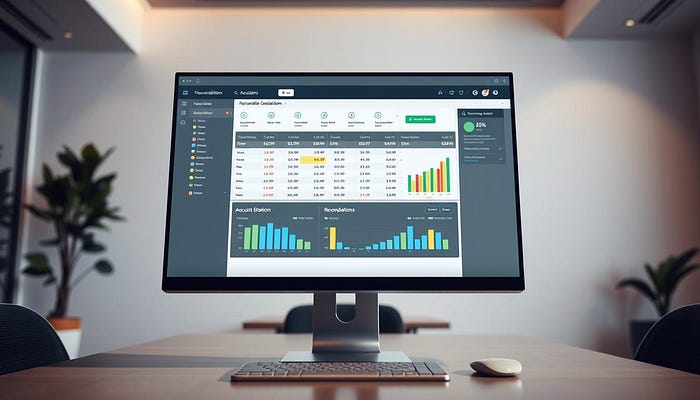
You can't manage what you can't see. A modern accounting reconciliation software provides a single, centralized dashboard that gives you a real-time view of your financial status. This enhanced visibility allows you to identify potential cash flow issues, understand liability positions, and make data-driven decisions with confidence. It puts you firmly in the driver's seat.
Beyond Safety: The Incredible Efficiency Gains
While safety and compliance are paramount, the efficiency benefits of an automated account reconciliation system are too significant to ignore. This isn't just about replacing a manual task; it's about unlocking your team's potential.
- Time Savings: What used to take days or weeks now happens in hours or minutes. This frees up your finance professionals to focus on analysis, strategy, and value-added activities.
- Massive Scalability: As your bank grows and transaction volumes explode, a manual process would require hiring more and more staff. A scalable reconciliation automation tool can handle the increased load without breaking a sweat.
- Boosted Employee Morale: Let's be honest, no one went into finance to spend their days manually matching data in spreadsheets. Automating this tedious work leads to higher job satisfaction and allows your team to use their skills for more engaging work.
Choosing the Right Reconciliation Solution for Your Bank
Not all software for bank reconciliation is created equal. When you're looking for a partner, here are a few key things to consider:
- Integration Capabilities: Can it easily connect with your core banking systems, ERP, and other data sources?
- Customization and Flexibility: Can you tailor the matching rules and workflows to fit your unique needs?
- User-Friendliness: Is the interface intuitive? A powerful tool is useless if your team finds it difficult to use.
- Scalability and Support: Will the vendor grow with you, and do they offer reliable customer support?
Investing in the right reconciliation software is an investment in your bank's future stability, compliance, and growth.
Conclusion: The Future is Automated
The landscape of banking is changing at a breathtaking pace. Relying on manual processes for a critical function like reconciliation is a massive gamble with compliance, risk, and efficiency. Modern reconciliation automation tools offer a clear path forward. They are the essential upgrade that empowers banks to not only survive but thrive, turning a routine accounting task into a strategic advantage for better control, deeper insights, and a stronger, more secure financial institution.
Also Read: Why Software for Bank Reconciliation Is a Must for Modern Finance