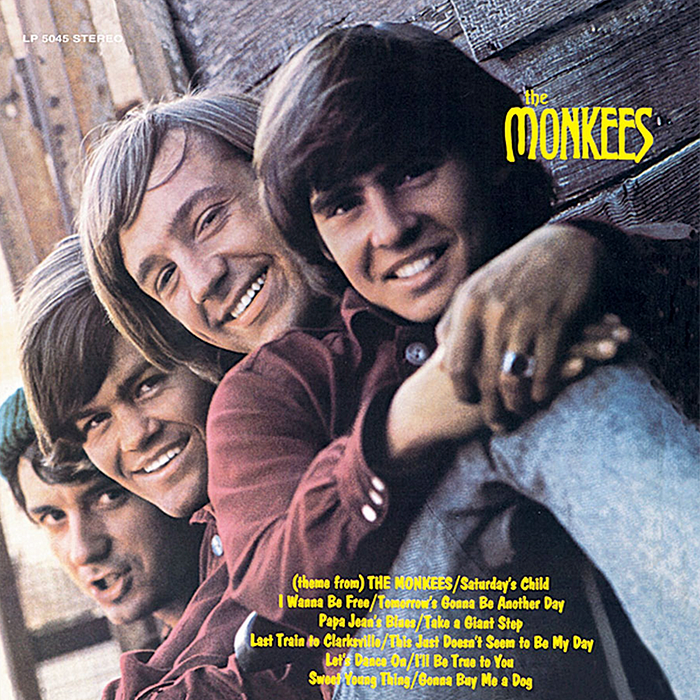


Micky Dolenz has often said that The Monkees is a television show about a band. That is how it started, but over the years, it evolved into an actual band with additional members.
I've always been impressed by The Monkees' catalog. Their records were so diverse: bubblegum, country rock, psychedelia, vaudeville, garage rock, comedy, pure pop, political, experimental…
The television show often depicted the band using Gretsch guitars, drums, and a Vox organ. They were presented as a self-contained group, just as The Beatles or The Who were. The news of how the band used studio musicians on their hit records caused a scandal, even though it was a common practice used by other hit bands of the day.
This led to The Monkees recording their third album without outside musicians. However, the physical demands of filming a television show and then making a full-length Hollywood movie proved to be too much, and the band returned to using studio musicians to record their backing tracks.
As record sales boomed, the rigors of the road became too much for Peter Tork, who left the band in 1968. Michael Nesmith followed shortly after. The remaining two Monkees called it quits in 1970 after their final album, Changes.
When The Monkees reformed as a trio in the late 1980s, their instrumentation consisted of electronic drums, synthesizers, and pointy guitars. That sound is just as dated today as the neon blazers and mullet haircuts they wore. As they played to stadium crowds after MTV dusted off the original episodes in an improbable comeback, it would have seemed odd if they had not updated their sound and look from their heyday. The giant crowds were excited to see the group together again, even without Michael Nesmith.
As the band continued to perform, auxiliary musicians rounded out the performances. Somewhere in the early 2000s, Andrew Sandoval had a vision. He wanted a Monkees live show to be a multimedia experience with video clips and photos. He also felt the sound of the original records was such an important part of their success that they should try to replicate it onstage. The backing band became just as crucial to the sound as the principal singers were.
After Davy Jones died in 2012, Nesmith committed to a full U.S. tour. This was my first time seeing the new approach to the live show. The Ryman Auditorium was full of enthusiastic fans who sang along with both the hits and the deep cuts. The band had worked out the parts, and it was magical.
A band we all heard on the radio really was just a television show about a band, and now they were putting together a traveling version of these records we all loved.
Around this time, Zilch! A Monkees Podcast started, and I became a regular listener. I was invited to be a guest several times, and I discussed the studio musicians who played on the original records. Host Ken Mills visited Nashville and asked me to lunch, where I met bassist John Billings. We immediately hit it off and swapped road stories. We discovered we live very close to each other and have stayed friendly all these years.
I've had many deep conversations with John about the dynamic of The Monkees and how it has evolved into more than just a group of sidemen. The band is a family that has stayed together through the years and survived the deaths of Peter Tork and Michael Nesmith. The core group continues today with the lone surviving Monkee, Micky Dolenz. Bandleader Wayne Avers, drummer Rich Dart, guitarist Emeen Zarookian, singer Coco Dolenz, and keyboardist Alex Jules are a tight unit that can replicate the original records and expand and experiment with the material.
It struck me the other day as I was listening to Pisces, Aquarius, Capricorn, and Jones, Ltd., the high-water mark (in my opinion) of Monkees albums. I used to hear a Monkees song and imagine the four young guys performing as it was presented to us on the television show. As I grew older and learned more about their situation, I imagined the studio musicians laying down the tracks (Chip Douglas played some mean bass parts on that album).
Now I listen to it and visualize John Billings and Rich Dart chugging along as Wayne and Emeen play their guitars. The Monkees ARE a band, and they are more than just four guys.
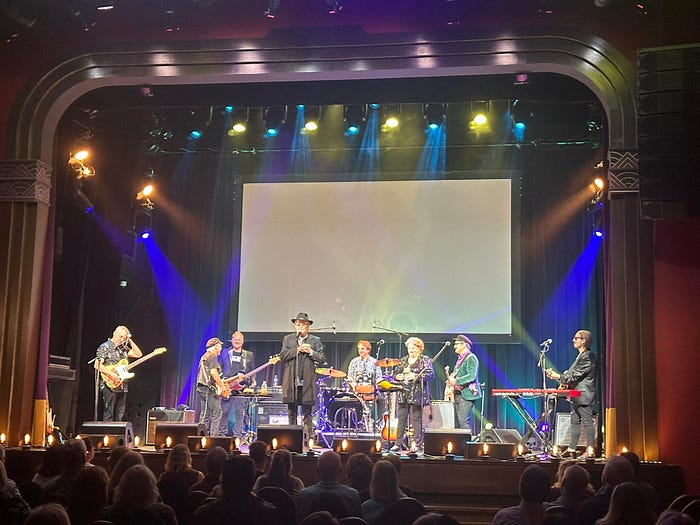
Yesterday, I got to see them perform with Micky Dolenz at the Franklin Theater. Thanks to John and Wayne for having me backstage to say hello to everyone. The show was a great collection of stories and memories of Micky's career. Well done, guys!
The first two times I met Micky Dolenz is a story of great contrast.
The first encounter was in a parking lot outside the 9:30 Club in Washington, DC. It was 1997, and we were on tour with Bob Dylan. After our opening set at Wolf Trap in Vienna, VA, a journalist who was backstage informed us that The Monkees were playing, and he was on the guest list. He agreed to drive us to the club, and we arrived just after the show started. We found that it was sold out and we had no tickets.
Chuck Mead talked to the doorman, and after a few seconds, we were motioned into the club. I asked him later what he said to the guy.
"I told him we were on tour with Bob Dylan, and he let us in," he said.
The Monkees were minus Michael Nesmith. Throughout the show, people kept pointing up to an area where some people were standing. I couldn't tell who it was, but the word spread that it was Papa Nez himself. I kept trying to get a better look, and people kept pointing up as the show continued.
The three Monkees finished their set, and the capacity crowd demanded an encore. It felt like everyone in the building was holding their breath as the band came out to do a couple more. Alas, it was only the three members. It was still a great show.
The journalist who drove us to the show asked if we wanted to meet Micky. Of course, we did. We walked around the back of the club, where the tour bus was, and Micky was walking out.
"Hey, Micky! These guys are in BR5–49. They are opening for Bob Dylan's Summer tour."
"How is Bob doing?" the drummer asked through gritted teeth.
"He's great," Chuck said.
"Tell him I said Hi," and just like that, Micky Dolenz jumped on his tour bus and was gone.
He wasn't rude, but it was far from a meaningful exchange.
Later, I discovered that the journalist we were with was a less-than-noble character.
Fast forward fifteen years: A new podcast called Zilch! was started. It was great to find a whole community of Monkees fans. I was even asked to be a guest on the show. I developed some great friendships through that entire experience. Ken Mills introduced me to John Billings, who played bass in the touring band that backed The Monkees. He lives in Nashville and, along with his wife Amy, started a wine bar just up the road from my house.
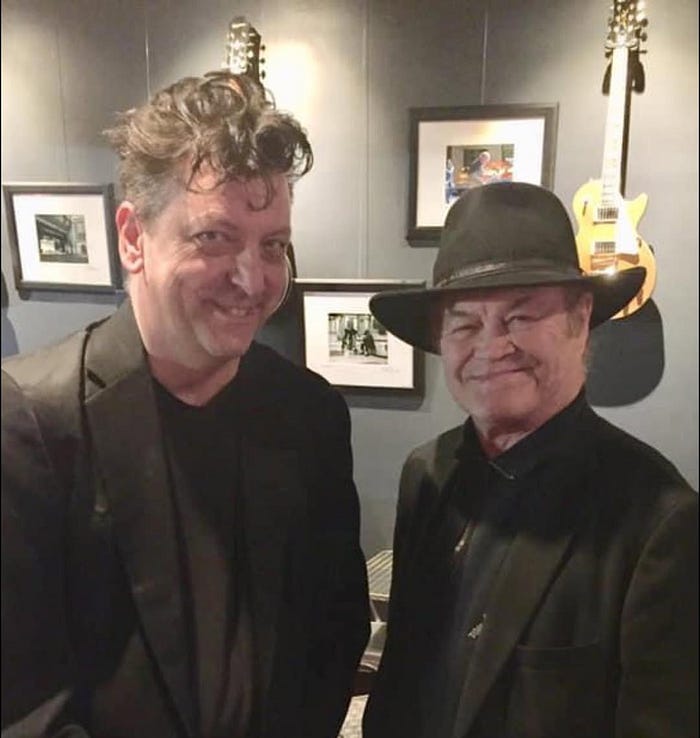
In 2019, Micky Dolenz visited Nashville. I was invited to hang out with a couple of John and Amy's close friends at the closed bar with Micky and his wife, Donna.
It could not have been a more opposite experience. Micky told story after story and answered question after question. By the end of the night, I was so relaxed. I felt like I could ask him about anything.
I asked him what his first concert was.
He thought for a few seconds… "James Brown."
I told him I talk about The Monkees daily at the museum. I use them as an example of how they were vilified for doing something that was a pretty standard practice for most pop groups at the time.
His face lit up when I said that.
He shared memories of getting one of the first Moog synthesizers after seeing one at a booth at Monterey Pop. He also recounted performing in Japan while there were active death threats against them. He talked about angling his cymbals up so that he could hide behind them. He started air-drumming and crouching down as if he were hiding.
He then started singing, "Take the last train to Clarksville…"
It was an amazing story, but it was THAT voice that we've all heard for our entire lives.
The whole experience taught me that you can't judge a celebrity entirely based on a single 45-second interaction.
My band, BR5–49, appeared on Fox & Friends a few times. One time, Davy Jones was also a guest, and we ended up hanging out for hours in the green room. He was very friendly and loved talking about all kinds of music. He started talking all about his mother's records and how he still listened to them. We spoke about Louis Jordan and His Tympany Five, Bing Crosby, and current country music out of Nashville. I was impressed by how much of a music fan he was. I asked him all about the movie "Head." That was always one of my favorite things that The Monkees ever did.
Davy was promoting his book, "Daydream Believin'." He told us that his publisher was based in Nashville, and he was going to call them up personally and see that we would all get copies. Sure enough, when we returned to Nashville about a week later, there was a message from the publisher that Davy had called and set it up for us to come by and pick up copies of his book. He was a man of his word.
My favorite memory of that day is that just as he was walking out to sing "Daydream Believer," he turned to me.
He grabbed both of his lapels, gave a little tug, and said, "You sure you want a hit record, kid? You'll have to sing it when you're 55…" He gave me a wink and walked out on stage.
As a 55-year-old now myself, I see what he meant. I had always considered Davy Jones a teenybopper. He had always been Marcia Brady's celebrity crush. At that moment, he was a wise Sinatra-type, giving a kid some advice as he walked out, did his funny little dance, and sang the song everyone wanted to hear.
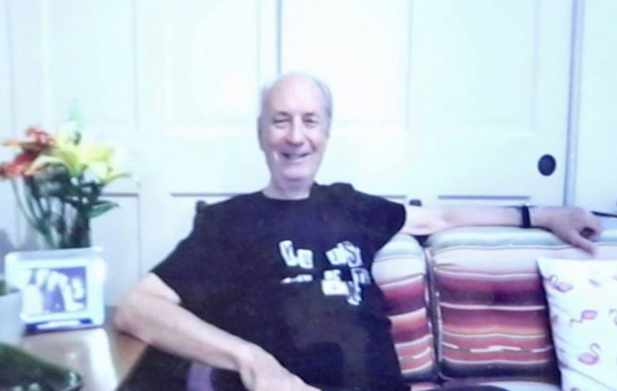
In June 2021, my girlfriend arranged for a Zoom meeting with Michael Nesmith. The wool-hatted Texan has always been one of my biggest influences. The Monkees were the gateway for me into the world of country rock. I soaked up those albums and was drawn to the songs that Nesmith wrote and sang.
The First National Band albums he recorded after The Monkees' demise were solid. With all of the scandalous fallout from the news reports that The Monkees didn't play on their own records, The First National Band recordings always seemed like they were thumbing their noses at those critics, as they were really well-executed musical offerings.
As I grew up and moved to Nashville, I made friends with several people who had worked with Nesmith. They shared a wide variety of stories with me of a man who could be charming and warm one moment and distant and cold the next. As the date of my virtual meeting approached, I began to have doubts. I was such a fan of his music, and I didn't want to taint it by having a bad experience with the musical icon. I'm happy to report that it was a lovely experience in every way. From the first moment, Nesmith was trying to make me feel comfortable and began the interview by asking me questions. Here is a little excerpt from our time together.
Jay: So, you're about to do some shows with Micky.
Nez: When we travel, you know, it's lavish. And, you know? Like this tour that I'm just about to go on with Mick is 48,000 tickets sold or sold out.
Jay: Great.
Nez: that's not bad for a couple of 80-year-old guys up there playing 70-year-old or 100-year-old music from a kids TV show. And I'm very proud of that. I'm very proud of it because I think that's — I didn't do anything to achieve it. I fell into it like falling into a tub of butter. I was just like, yes, I see that. And so, having all that constantly supporting what I was doing, it was just a natural for me to spin out. And when it was time, I said, 'Red, you want to do this band? I've got a name for it.'
Okay. Yeah, I'll do it. What's the name?
'It's The First National Band.'
He said, 'Oh, the First National Bank? That's funny.'
I said, 'No, no, no. First National Band.'
You see, it's kind of a little moving pun, a little eye wink. It's a bad pun, but there it is. So we were all in. I wrote the album, and in the middle of it, I also wrote The Hit's Just Keep on Coming and some other stuff like that. Then John came in to play bass because he'd played with me all before, you know, when we were traveling around Texas, knew all the songs. And the RCA guys gathered around and said, 'What are you doing?'
And I played it for them, you know, 'This is really good.' But frankly, there were a lot of eye rolls around the room.
A lot of people went, 'Oh great. What we need is another country album from a pop star.'
Jay: Cowboy music?
Nez: Yeah. It was not well received. But I did another one which contained 'Silver Moon,' which got them all excited. Management changed at the same time, and so forth. But still, in all, there was no life, however long I tried to resuscitate and do whatever this thing is and no life, nothing ever. But for some reason, and I'm going to tell you that it had to do with Red Rhodes, but I may be off a little bit. But something made that sound, the slide guitar, gather some kind of acceptance. And I think it made its way in as a blues instrument. Being, you know, the lap steel played in Appalachia and then the blues of Ry Cooder and those guys who set the bar, no pun intended. And so that stuff in the First National Band didn't stick out in any degree. It was like, 'Oh yeah, that's where the music goes. It needs this. It has to have this.'
Jay: Nice. Tell me anything about the Wichita Train Whistle.
Nez: Well, it is on register, as maybe, the most colossal mistake that any amateur conductor can make with a high-quality, first-call professional band.
Jay: Well, It's a beautiful mistake.
Nez: Yeah. Oh, okay. Well, I'm going to follow you in on this, but you should know a few more little details. And I call Shorty Rogers. I've been kind of working with him, and I said, 'Look, I want to do something this weekend that's going to be so expensive. I don't care. I want to do it because I want it 'on the record,' so to speak. You've already played some of these songs, and we've got them set up to do for the shows and for scoring and so forth. But I want to do it on this record called the Wichita Train Whistle. Well, let's sit down and arrange it. So we did that over the next four or five days. We had charts.'
And I said, 'Okay, can you get the band going, Shorty?'
And he said, 'Can I get them going? They're sleeping on my front lawn! Some of the word's gotten out about this. And, you know, everybody, all the first call guys want to do it.'
Well, the big band era had been over since the 1937 Carnegie Hall jazz festival. I mean, Benny Goodman took it and knocked it up into the lights. (Nez made a sizzling sound.) That was it. Game over. But it was still — there was a traction for it. There was a need for it to be played well, and kind of like prog rock today. Who understands prog rock? Not even prog rock players. They can't even spell it. How many Rs are in prog rock? I mean, it's nonsense anyway. When you have these great players, and you put them in a room, even if you just improvise, something's going to come out that is not normal because they're off the charts, so to speak, or as the lingua franca is, and not only were they off the charts in my sessions they were also getting surely, slowly drunk because I, like the lunatic that I am, I set up a free open bar. And when they walked in the door, they didn't say 'hi,' didn't say nothing. They walked over to the bar, ordered a number one mark that they could, and just glugged it. And needless to say, third song, fourth song,
'(in a drunken slur) Tommy threw his guitar. Hey, Tommy's wild.'
It was like that. And so when Buddy Brisbois started playing those incredible riffs and solo excursions, you know, he was blowing. I mean, his temples were out to the side of each wall, just, rah, rah, rah, rah, rah, rah, rah, rah, rah, rah.
Like I said, I think it was the greatest remnant of the big band era played in Los Angeles. So that was all fair enough. With the best of the best of the best players, all drunk, I don't know who came up with that last little joke. I think it was my guardian angel. She said, 'Say, all drunk. Get them all drunk. That'll make it so much fun.'
Jay: Well, it's a post-modern — It's a mixture of every direction and-
Nez: Yeah, what you said. That's a decent definition of post-modern. Most people don't have any idea what post-modern means. And so just that you would know that much, you know, non-sequitur.
Jay: Okay, I'll stay with that, I'll hold that,
Nez: Yeah. Yeah.
Jay: One other question I had, and then I'll let you go.
Nez: Oh, okay, good. Well, I'm having a good time, Jay,
Jay: So, The Prison.
Nez: Sir.
Jay: The book from The Prison has illustrations. It says by kindergarteners. All these years later, do you ever cross paths with any of those kids? Does anybody come up to you and say I drew a picture in this book?
Nez: Not anymore. That happened, you know, 20 years ago. Okay, because they were offered, first of all, they were all kindergartners. Right. So the average age was like four.
Jay: They'd be about my age now.
Nez: Right. Yeah, okay. Yeah, I think so. And I gave them the drill. I said, 'I don't have any money. I just want you to draw pictures, and the only thing I'm going to say is to make sure that the coloring goes all the way to the edge of the paper. Get all the way out there, and I'll pay you for it.' And, I don't know, I think I paid $200 or something. Well, it would have been a bloody fortune to a four-year-old.
Jay: Well, sure, imagine, yeah.
Nez: Yeah, that's college and a trip to Europe. No, I knew what I was doing there. I was, you know, papering the streets of Rome. But when they first started coming in, I knew they couldn't read. So, somebody was conveying to them the ideas that were contained in The Prison. It's nothing very cosmic, you know. It looks like it's there, but it's not. I mean, it's not much harder than that. And so you're parsing all that and saying, 'Hmm, wonder why it looks like it's there.' And you start to untangle some knots of the universe and everything. And I was watching the pictures as they came out from the kids dothe same thing. And they didn't know the story. They didn't know the characters. They didn't care. They were four. But I'm so glad that you noticed that because I loved working with the kids and, to some degree, the parents. But you know, You've gotta fall in love with a four-year-old. You know, that's the best dinner company you can get.
Jay: Right. A four-year-old mind can say something back to you in a way that you'd never looked at it. And it can be so profound.
Nez: Yeah, and the world changes. No, you're exactly right. I don't know. I look for that all day, every day. If I find something, I'll grab it and put it in my pocket. Keep it until the next time.
Thank you for taking the time to do this. This is a big thrill for me, and I sure do appreciate it.
Nez: It was a good pleasure, and if you ever see me out among the crowd, say hi.
Jay: I sure will.
Nez: I mean, I will recognize you if you do that. That's just not me blowing smoke.
Jay: Well, thanks so much. I sure do appreciate your time.
Nez: Yeah, it's been fun. Tell everybody hello, be careful, and don't stand on any balconies.
December 10, 2021, started out like any other day. I took my son to school. I put gas in my car and headed to work at the museum. We had a group of elementary school kids on a field trip, and they were so excited to visit the museum. I talked to them about different kinds of music, and they told me about what instruments they played and what kinds of music they enjoyed. It was very uplifting.
Just about the time we got to The GRAMMY Gallery, my cell phone started blowing up. I was in the middle of talking to the kids, so I didn't want to pull my phone out, but I knew that something was up. When I was able to slip away for a minute, I saw the news that Michael Nesmith had passed away. It felt like a punch in the gut. With the anniversary of John Lennon's death being just two days earlier, I noticed how many posts on social media were made about the impact of that event. We all shared the sadness of that tragedy.
This was happening right now, and people from all parts of my past were sending messages of condolence and comfort, saying they knew I would be hurt by the passing of this musical giant.
It occurred to me that I had bonded with people through the years over this man's music, and he had reached people from all different parts of my past. When the news broke that he had died, they felt like I would need comforting. I certainly don't mean to make it all about me.
My point is to show just how powerful the reach of this music is. It resonated with all of us, and we felt a special bond from it. We thought of each other when we received the tragic news.
Just as that was soaking in and I was feeling overwhelmed by it all, I had to return to this group of school kids who were having the time of their lives playing, mixing, recording, sampling, and DJing. I walked into Roland's room, where there were two little girls. One was on the drums, and the other was on the microphone. I picked up the bass and joined them. The drummer was not doing a regular beat, but she was keeping perfect time. I started playing a straight bassline, and she was able to lock in with the rhythm. It was beautiful. It wasn't a traditional drum beat. It was just kind of a random, hitting of drums and cymbals, but it was perfectly imperfect.
I turned to the girl on the microphone, and she started singing along with the bassline, "I don't know what to sing about" were her first lyrics.
"But that drumming makes me wanna dance," she continued.
She started doing a cute little dance as she went on, "Every time I see you, It makes me wanna da-ance. The way you make me fe-el, it makes me wanna da-ance."
We continued this song for a few minutes, and some parents started gathering and dancing. It was a completely spontaneous moment that I couldn't recreate any better if I tried.
As we brought it to an end, everyone in the room yelled and cheered.
As the kids were heading back out to their school bus to leave, it hit me. These kids brought a joyous feeling to me at the exact moment I needed it. We lose people almost every day who have some connection to the museum or are in our musical orbit. That is the worst part of my job. But seeing the joy on a couple of nine-year-old girls as we made up a song on the spot was one of the best things I've ever experienced.
As Nez has always referenced cosmic events and untangling knots of the universe, it wasn't lost on me.
I sure will miss you, Papa Nez.
April 3, 2022
Micky Dolenz was in town to play a show at the Ryman Auditorium. John and Amy Billings hosted a weekend of Monkee-related events at Wine Down Nashville. We held a memorial for Michael Nesmith. I moderated a panel discussion with musicians who had played with Papa Nez through the years. Afterward, John played bass, Rich Dart played drums, and guests were invited up to sing Monkees songs. It was a room full of lifelong fans enjoying themselves.
My favorite moment came during the Boyce & Hart classic, "She."
The hooky riff that leads into the stop encouraged the whole crowd to join in with the single lyric, "HEY!" as we all pumped our fists toward the sky.
It was infectious. The venue was small, and the band was essentially standing between the tables. The energy of that moment enveloped me, and it gave the entire room the feeling of what it's like to be onstage when everything is clicking just right. Those are the moments when the song feels like it's playing itself. It's an addictive situation. Once you feel that, you want to get back to it as many times as possible.
The night continued with ups and downs, but a good time was had by all.
The following night was when it all became clear to me. Micky Dolenz played his show at the Ryman. Julea and I sat in the middle of the balcony and had a great view. It was poignant to see him as the last Monkee standing, and there was a feeling among the band that this may have been the last hurrah. It was a celebration of the Monkees music. The sound was great, and Micky was in good voice. Halfway through the first set, the band kicked into "She." I had a rush of adrenaline come over me as the song started because of my experience the night before. The band was locked in, and the crowd responded. However, it didn't deliver the same rush in that big hall as in the small room the night before. It was anticlimactic. I still had a great time, but it showed me the difference between an arena setting versus a musical experience in your living room surrounded by loved ones.
By day, I work at the Country Music Hall of Fame & Museum. Buy me a coffee.