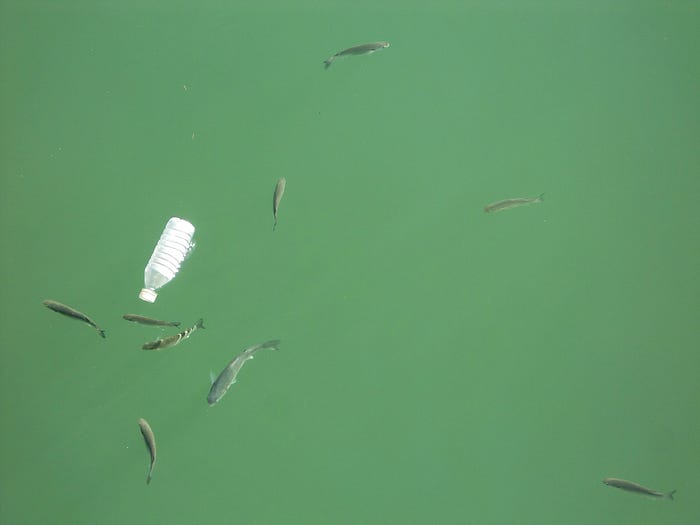


In 1907 the invention of Bakelite by Belgian-born American chemist Leo Hendrik Baekeland brought about a revolution in materials and introduced synthetic plastic resins into world commerce.
But the shocking reality is — by the end of the 20th century, that plastics have become a major headache of the environmentalists as it polluted the entire environment — from Mount Everest to the bottom of the sea. Now, plastics invaded us completely, and we are literally drowning in plastic waste.
Plastic pollution is the accumulation of plastic objects and particles, including plastic bottles, cans, bags, masks, microbeads, in the environment that adversely affects wildlife, wildlife habitat, and humans.
It's visible everywhere, especially in the developing countries of Asia and Africa and in the countries where the garbage collection systems are often inefficient or nonexistent, and the plastics recycling rate is comparatively low.
Though it is a crucial threat to our existence, we hardly talk about this life-threatening issue. We think it's some NGOs' duty to talk and governments' duty to act. But we are undoubtedly wrong.
As we are the ultimate consumer, we must talk about it more and play our part — by making a little shift in our lifestyle — to reduce plastic pollution.
To realize how grave is the current situation, let's know some astonishing facts about plastics to raise awareness among us.
8.3 Billion Tonnes of Plastic Since 1950
Researchers estimate that more than 8.3 billion tonnes of plastic have been produced since the early 1950s. We've witnessed an extreme increase in plastic production since 1950, and its rapid growth outnumbered any other materials on the earth.
300 Million Tonnes Plastic Waste Every Year
According to UNEP, we produce about 300 million tonnes of plastic waste every year. That's nearly the equivalent of the entire human population. And about 60% of all the plastic has ended up in either landfill or the natural environment.
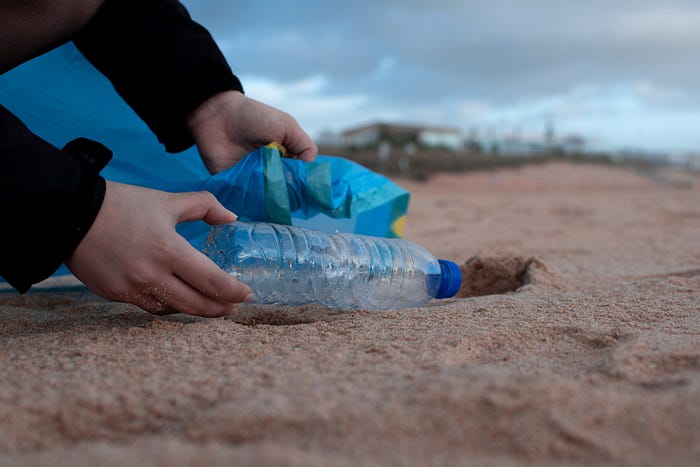
73% of Beach Litter Worldwide Is Plastic
It's a depressing reality that we have polluted our beaches with plastics. People enjoy drinks while basking on the seashore and then unmindfully throw the cans or bottles into the seas.
Last year, while visiting a beach in Kochi, India, I became depressed to see plastics and dolphins surfing together.
01 Million Plastic Beverage Bottles Sold Every Minute
Today, more than 01 million plastic beverage bottles are purchased every minute. A Guardian article says more than 480bn plastic drinking bottles were sold in 2016 across the world, up from about 300bn a decade ago. If placed end to end, they would extend more than halfway to the sun.
It's shocking to acknowledge that today plastic bottles and jars represent about 75 percent of all plastic containers (by weight).
500 Billion Plastic Bags Are Used Annually
Plastic bags have become an inseparable part of our daily life. When we shop, we get it for free from our vendors. In most cases, we don't give a second thought before having one. But it has a devastating effect on our environment.
According to EcoWatch, approximately 500 billion plastic bags are used worldwide. More than 01 million bags are used every minute.
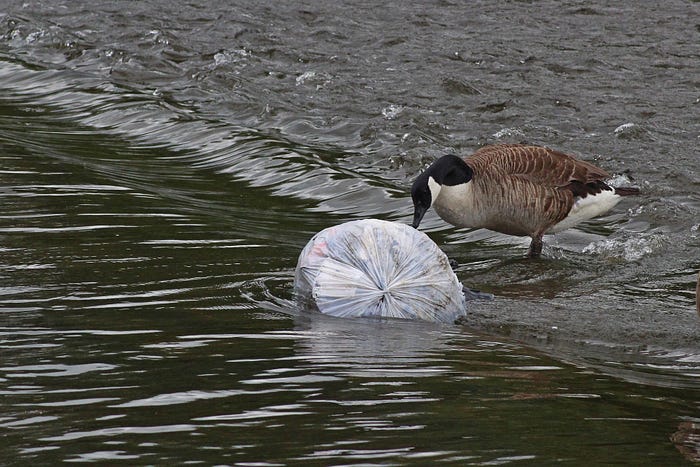
Over 150 Million Tonnes of Plastics in the Ocean
A study by the Ellen MacArthur Foundation reports that each year, at least 8 million tonnes of plastics leak into the ocean — which is equivalent to dumping the contents of one garbage truck into the ocean every minute.
It also says that the best research currently available estimates that there are over 150 million tonnes of plastics in the ocean today. The ocean is expected to contain 01 ton of plastic for every 03 tonnes of fish by 2025, and by 2050, more plastics than fish (by weight).
You Eat 11,000 Tiny Pieces of Plastic Every Year with Seafood
Plastics are coming back to you — from the sea to your plate — in different forms. You are eating up to 11,000 tiny pieces of plastic every year with seafood, calculates Ghent University scientists.
Moreover, a study by Plymouth University reported that plastic was found in a third of UK-caught fish, including cod, haddock, mackerel, and shellfish.
An Average Person Eats 70,000 Microplastics Each Year
Microplastics can float in the air and land on your food, and it's invisible to your eyes. So, when the microplastics are frequently taking a landing on your burger or pasta, and you are getting a steady dose of plastic waste even before you know it.
Over the course of a meal, you're most likely consuming around 100 bits of microplastic and, in a year, closer to 70,000 pieces.
Over 01 Million Seabirds and Animals Killed Due to Plastics
An article published in Sea Turtle Conservancy mentioned that each year over 01 million marine animals (including mammals, fish, sharks, turtles, and birds) are killed due to plastic debris in the ocean. This debris includes plastic bags, bottles, balloons, degraded buoys, packaging materials, food wrappers, and more.
With time, these plastics break down into smaller and more toxic pieces. According to the United Nations, the ingestion of plastic kills more than 01 million marine birds and 100,000 marine animals each year.
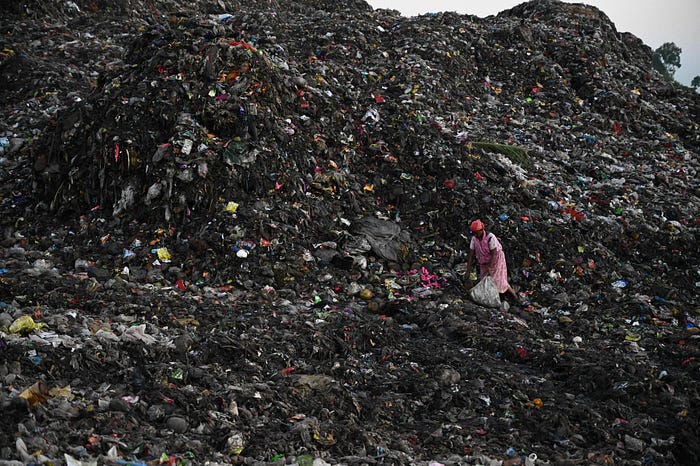
12 Billion Metric Tonnes of Plastics in Landfills by 2050
The majority of plastics end up in landfills as litter. Only a tiny fragment of it gets recycled. And if the present trends continue, experts warn that by 2050, there will be 12 billion metric tons of plastic in landfills.
That amount is 35,000 times as heavy as the Empire State Building.
It takes 400+ Years to Degrade a Plastic Bottle
A National Geographic article claims that plastic takes more than 400 years to degrade, so most of it still exists in some form. Moreover, most of the plastics we use end up in lands and seas, causing harm to insects, birds, marine animals, and fish.
To Conclude
Plastic pollution is real, and we, human beings, are responsible for this disaster. But the good thing is we can still do something about it with a collective effort.
We need to acknowledge that we are responsible for this and then take a few simple steps to keep our surroundings plastic-pollution free. Your tiny changes in habits — like not using single-use plastics and polythene bags or carrying a water bottle — can make a big difference and inspire others to do the same.
Plastic waste is everywhere, and it's time to do your part to come out of this man-made disaster. I highly recommend you add the environment to your new year's resolution and start being mindful when it comes to using plastics.
Thank you for reading.
If you are interested to know who are the world's worst plastic polluters of 2020 and what YOU can do about it, you may read the following article published in The Environment.