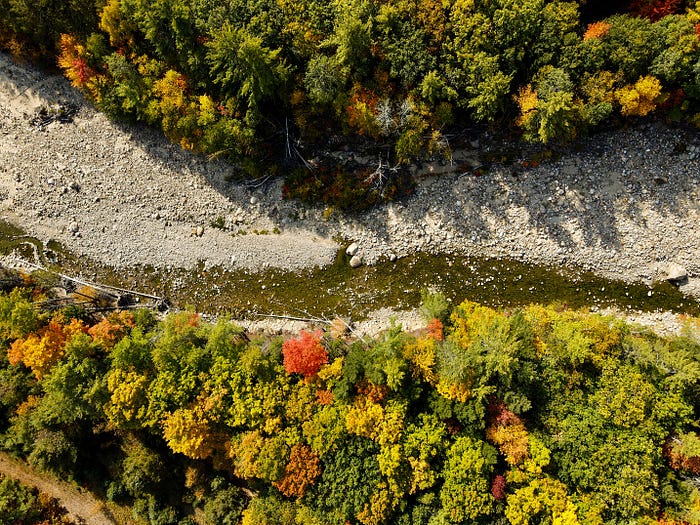
When I watched the documentary about Mr. Jadav Payeng, I thought to myself — this man has a golden heart, bigger than all of us. Even billionaires seem so little in front of him.
What did he do? He transformed a wasteland into an oasis by planting a tree every day for 40 years. Yes, forty long years and continuing. It's beyond my imagination.
This selfless man beats every one of us and our money-and-success-sucking mentality. He is a true genius.
How it started
It was a sunny day in 1979. A 16-year-old boy Jadav was wandering on the sandy island of Majuli, the world's largest river-island, located in Assam. He was observing how the recent flood had damaged the environment. The water of the Bramhaputra river frequently washes away its banks, and the soil, trees, wildlife, and humans, everything gets affected.
Young Jadav was in a pensive mood, thinking and walking under the scorching sun. Suddenly, a terrible sight caught his attention. He saw a lot of dead snakes scattered on the sand. Jadav, out of curiosity, went nearer and understood that they died due to terrible hot weather. Those lifeless snakes made a huge impact on his young sensitive mind. He determined to do something so that no animals die due to the terrible heat.
In his community, he saw that people hardly about the trees, environment, or wildlife. At that young age, he determined to play at least his part to save the environment. The next day, he again went to that barren land and planted some bamboo saplings.
Jadav describes, "I started planting trees in 1979. The Deori community elders told me if I wanted to prevent snakes from dying, I should plant the world's tallest grass. I didn't know then; they meant bamboo. They gave me 50 bamboo seeds and 25 saplings, and that's how this began."
Molai forest
Planting tree-saplings on that wasteland became his daily routine. But it was not that easy as it sounds.
He had to walk at least 20 minutes, then take a boat to cross a river, and then walk for two hours to reach that god-forsaken land. He did that day after day for 40 long years to transform that desert into a beautiful forest.
He planted trees, watered them, and took good care of them every day. Moreover, when the trees grew bigger and attracted wildlife, Jadav protected them from poachers with the help of the local administration.
Now that forest is best known by 'Molai forest' — as Molai is Jadav's nickname. It is estimated to be 550 hectares, which is bigger than the Central Park of New York.
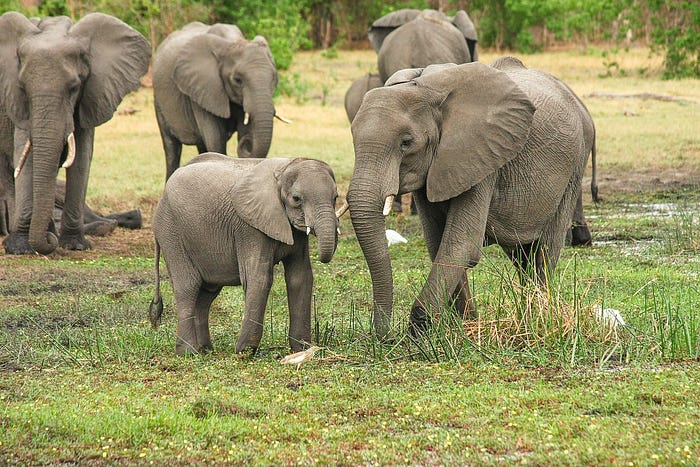
The forest is now home to different birds and animals, including 1,000 deer, Bengal tigers, rhinos, monkeys, vultures, rabbits, snakes, and more. Each year, around 100 elephants stay in that forest for six months.
Becoming the Forest Man of India
One day in 2009, when a local journalist Jitu Kalita was exploring the barren part of the Brahmaputra river by boat, he saw a forest-like area n the far distance. It was quite an unusual sight in that vast sandy land. So, he decided to explore the area.
When he reached the forest, he couldn't believe his eyes. It was impossible to see such greenery in the middle of that wasteland. He explored the area and took lots of photos. Then while leaving the forest, he found a man by the riverside.
The man first tried to attack Jitu, thinking that he was a poacher. But then, Jitu introduced himself to that man. When asked, that man said he was planting trees there and had been doing this since 1979. Thus the journalist Jitu Kalita discovered Jadav Molai Payeng, the Forest Man of India.
Later, Jitu wrote an article in a local newspaper. Eventually, Jadav and his work spread across India. In 2012, Jitu also produced a documentary film named The Molai Forest, screened at the Jawaharlal Nehru University, India.
Moreover, on April 22, 2012, Jadav Payeng was honored for his phenomenal work at a public function arranged by the School of Environmental Sciences, Jawaharlal Nehru University. In that event, JNU vice-chancellor Sudhir Kumar Sopory named Jadav Payeng as the "Forest Man of India."
Numerous documentaries have been made on Jadav Payeng and Molai Forest afterward to disseminate the message of reforestation.
William Douglas McMaster, in 2013, made a documentary film Forest Man which was awarded the Best Documentary prize at the Emerging Filmmaker Showcase in the American Pavilion at the 2014 Cannes Film Festival.
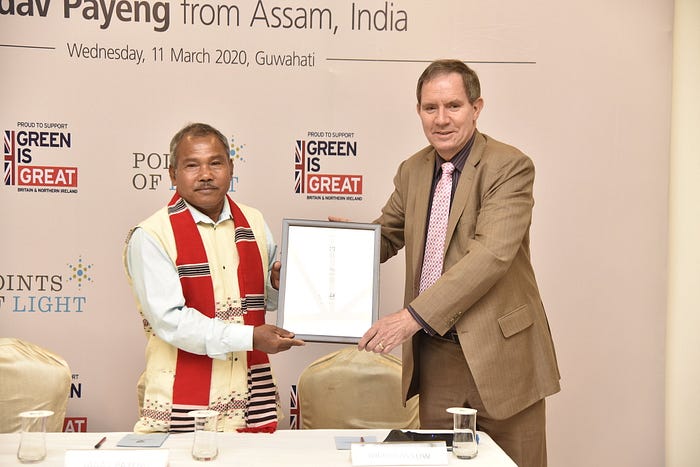
Jadav received many awards and admiration for his extraordinary contribution to reforestation, including Padma Shri in 2015, Commonwealth Points of Light Award in 2020, and many more — though he didn't do that for any fame, or prizes.
In his words, "I grew up loving nature — clear blue skies, tall trees, birds and animals. I tell everyone: It is not human beings who changed my life. It's the trees that have put clothes on my back, birds who have taken me across seven seas, from the land where the sun rises first, to where the sun sets last."
This type of story of selflessness makes me think — what am I doing for the environment? In other words, what are we doing for our lovely planet?
We are only taking and taking — and — wanting more. We are destroying trees, wildlife, mountains, rivers, lands, oceans, and so on. We call ourselves the most intelligent species of all, but we act like the stupidest ones.
It's time to learn from this genius mind, Mr. Jadav Molai Payeng, and act accordingly to keep this planet liveable.
Save your environment. Save yourself and the generations to come.
Thank you for reading.
References
- Extraordinary Indians: How 'Forest Man of India' Jadav Payeng singlehandedly turned fallow land… (Readers Digest)
- The Forest Man of India (Points of Light)
- Reforestation Hero: Jadav Payeng (One Earth)
- How This Guy Planted A Forest? (Nas Daily)
- Forest Man by William D McMaster
- Jadav Payeng — Wikipedia
If you are a lover of the environment, nature, and wildlife, you may enjoy the following articles published in The Environment.
- The School of Nature
- I Saw My Darlings on a Dye-Fig Tree
- Color Your Life With Some Birds
- Where Have All the Birds Gone?
- Global Warming Is Going to Destroy Your Children's Life
You can also share your love and concerns for this lovely planet. Just click the below image and write for The Environment